Specialized in the production and supply of a full range of aluminum profiles and metal fabrication

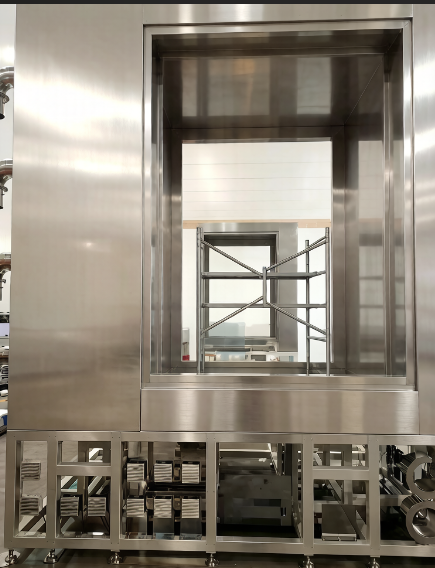
CNC stainless steel shelf
✨ Why Choose CNC Stainless Steel Shelving?
The combination of material and process creates a product that stands out for its durability and precision:
-
Superior Material: Stainless steel, particularly grades 304 and 316, is naturally strong, highly resistant to corrosion, and easy to clean, making it ideal for hygienic applications-50.
-
Unmatched Precision: The CNC (Computer Numerical Control) machining process, including milling and turning, achieves tight tolerances (often within a few microns) and produces complex parts with high consistency-8-16.
-
Customizable Design: CNC technology allows for the creation of custom brackets, unique shapes, complex wire forms, and intricate perforations that would be difficult with standard fabrication-8-21.
-
High Strength: This combination yields components with excellent load-bearing capacity, making them suitable for heavy-duty industrial or commercial use–-8.
⚙️ Manufacturing: Key Processes and Materials
Creating these shelves involves a range of advanced manufacturing techniques. While “CNC stainless steel shelf” is a general term, it often points to the following processes:
| Component | Primary Manufacturing Process | Key Capabilities / Details |
|---|---|---|
| Main Shelving System | Sheet Metal Fabrication | Combines laser cutting, CNC punching, and press brake bending to shape large sheets into shelf decks, uprights, and beams–-51. |
| Custom Brackets & Hinges | CNC Machining (Milling/Turning) | Used for producing small, precise, and complex solid metal components like shelf brackets, supports, and hinges-8. |
| Wire Shelving | CNC Wire Forming | Automates the bending of stainless steel wire into shelf decks, suitable for applications requiring air circulation–-21. |
| Structural Uprights | Roll Forming | A continuous bending process often used in conjunction with CNC punching to create slotted, C-shaped uprights efficiently and precisely-1. |
The most commonly used materials are grades 304 for general-purpose corrosion resistance and 316 for superior chemical and saltwater resistance-50-8. High-quality components are often machined to tight tolerances (e.g., ±0.01 mm to ±0.1 mm)-8.
🏭 Leading Manufacturers & Suppliers
A global network of specialized manufacturers offers CNC stainless steel shelving. The following table provides an overview of some key players to help you start your search:
| Company Name | Location | Specialty / Key Capabilities |
|---|---|---|
| MetalFab Group | USA | Custom food-grade equipment, NSF standards, turnkey services-31 |
| Wardzala Industries, Inc. | Illinois, USA | POP displays, wire forming, stamping, assembly-21 |
| Rockford Specialties Co. | Illinois, USA | Medical/lab shelving, 1,200 lbs capacity, flush shelves-21 |
| JLMC, Inc. | USA | Diverse metal products, prototyping, assembly– |
| Guangzhou Shuangrui | Guangzhou, China | Sheet metal design, OEM/ODM, finishing (coating/spray printing)– |
| Huade (hdproto.com) | China | Precision milling/turning, small batches, surgical-grade components-36 |
| WANCHU | Guangzhou, China | Commercial kitchenware (sinks, workbenches), OEM, custom service-27 |
| Xuan Hong Phat | Vietnam | Laser cutting, precision metal fabrication, custom design– |
| RMT Products | Online | Custom CNC brackets (±0.01mm tolerance), 1–7 day prototyping, 304/316 options-8 |
💰 Cost and Lead Time Guide
The final price is highly variable and depends on several factors. Understanding these will help you plan your budget effectively. Costs are typically calculated based on setup time, machining time, material, and finishing.
Factors Influencing Cost
| Factor | Why It Matters | Cost Impact |
|---|---|---|
| Material Grade | 316 stainless steel is more expensive and harder to machine than 304. | Medium to High |
| Part Complexity | Simple brackets cost far less to produce than complex, multi-axis parts. | High (see examples below) |
| Tolerances | Tighter tolerances (e.g., ±0.005 mm) require slower machining and more inspection. | High |
| Surface Finish | Processes like mirror polishing add significant labor and time. | Medium |
| Order Quantity | Larger batches reduce the per-unit cost by spreading the initial setup costs. | Medium to High |
Example Price Ranges
To give you a ballpark figure, here are typical prices for machined stainless steel components, based on the part type:
| Component Type | Typical Price Range (USD) |
|---|---|
| Simple Brackets | $30 – $70–-47 |
| Machined Blocks | $40 – $120–-47 |
| Precision Mechanical Parts | $80 – $200–-47 |
| Medical-grade Components | $120 – $350–-47 |
| Complex Multi-axis Parts | $150 – $400+-47 |
Lead Time Estimates
-
Prototype (1-10 units): 1–7 working days-8
-
Mass Production (50+ units): 1–4 weeks, depending on order volume and complexity-8
💡 Key Takeaways
-
CNC is a process, not a product: When searching for suppliers, you may have more success by looking for companies that offer “custom stainless steel fabrication” with “CNC machining,” “laser cutting,” or “press brake forming” capabilities.
-
Start with a detailed design: The more precise your technical drawings and specifications, the more accurate your quotes will be. Consider using services like Thomasnet.com to find local suppliers-2-21.
-
Material choice is critical: Select Grade 304 for general-purpose, indoor use and Grade 316 for harsh or outdoor environments. If you require non-magnetic properties, specify 316.
-
Get multiple quotes: Given the wide price variability, obtaining quotes from several suppliers is a crucial step for any serious procurement.