Especializada en la producción y suministro de una gama completa de perfiles de aluminio y fabricación metálica

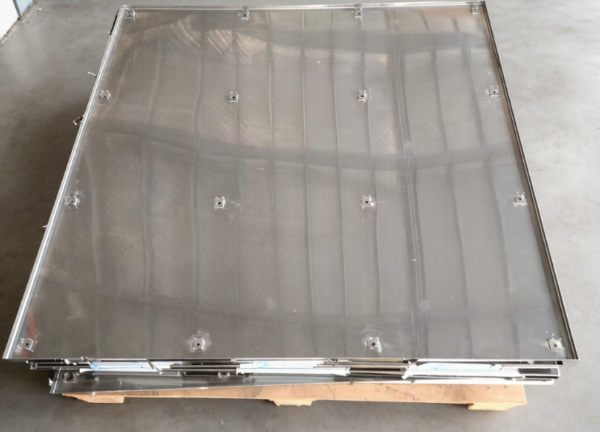
stainless steel sheet product
🔍 What Are Stainless Steel Sheet Products?
Stainless steel sheets are flat-rolled products known for their corrosion resistance, high strength, and excellent formability. They are available in various grades, thicknesses, and surface finishes to suit applications ranging from industrial equipment to architectural cladding and consumer goods-12.
📊 Classification of Stainless Steel Sheets
Stainless steel sheets can be classified by manufacturing process, material grade/series, and surface finish.
1. By Manufacturing Process & Thickness
| Type | Thickness Range | Key Features | Primary Applications |
|---|---|---|---|
| Cold Rolled Sheet | 0.1 mm – 6 mm | Smooth surface, tight tolerances, bright finish-3 | Kitchenware, home appliances, automotive trim, precision parts |
| Hot Rolled Sheet (No.1) | 3 mm – 125 mm+ | Scaled surface (pickled), lower cost, good structural integrity-1 | Heavy industry, pressure vessels, chemical equipment, construction |
| Thin Sheet | ≤ 3 mm | Lightweight, easy to form | Enclosures, panels, decorative applications |
| Medium/Thick Sheet | ≥ 4.5 mm (often >25 mm for heavy plate) | High strength, load-bearing capacity | Industrial machinery, bridges, storage tanks-12 |
Note: Hot rolled sheets are typically processed through high-temperature annealing and pickling to remove scale and improve corrosion resistance, making them suitable for industrial applications.
🧪 Material Grades & Series: A Detailed Guide
Stainless steel is broadly divided into 200, 300, and 400 series based on chemical composition, with further classification by microstructure-25.
300 Series (Austenitic) – The Workhorse
This is the most widely used series, characterized by excellent corrosion resistance, formability, and weldability-25.
| Grade | Key Characteristics | Typical Applications |
|---|---|---|
| 304 | The most common general-purpose grade. Excellent resistance to corrosion and oxidation; easy to form and weld-12 | Kitchen equipment, food processing, chemical containers, architectural panels, automotive parts- |
| 304L | Low carbon version (0.03% max); prevents intergranular corrosion after welding | Heavy welded structures, chemical processing equipment |
| 316 | Contains molybdenum (2-3%); superior resistance to chlorides (salt water) and chemicals-25 | Marine environments, coastal architecture, chemical plants, pharmaceutical equipment, medical devices- |
| 316L | Low carbon version of 316; better weldability | High-corrosion environments requiring extensive welding |
| 310S | High chromium and nickel content; excellent high-temperature resistance (up to 1100°C) | Furnace parts, high-temperature industrial equipment |
400 Series (Ferritic & Martensitic) – Cost-Effective & High-Hardness
This series contains mostly chromium, little to no nickel, making it magnetic and generally more affordable-25.
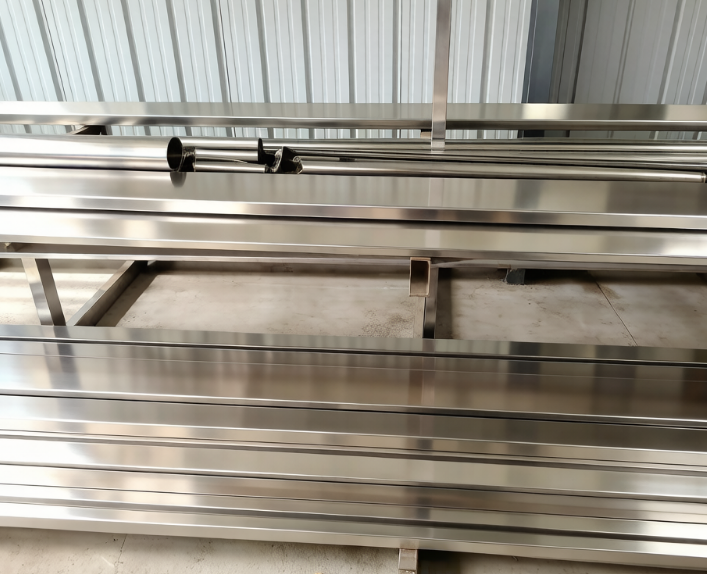
| Grade | Microstructure | Key Characteristics | Typical Applications |
|---|---|---|---|
| 430 | Ferritic | Good corrosion resistance (lower than 304), excellent heat conductivity, magnetic- | Appliance panels (washing machine drums, dishwasher interiors), decorative trim, automotive trim |
| 409 | Ferritic | Specifically developed for automotive exhaust systems; good heat resistance | Automotive exhaust components, heat exchangers |
| 410 | Martensitic | Can be heat treated for high hardness; magnetic; moderate corrosion resistance | Valve parts, pump shafts, cutlery |
| 420 | Martensitic | Higher carbon content; excellent hardness after heat treatment | Medical instruments (scalpels, forceps), cutting tools, molds- |
| 440C | Martensitic | Very high hardness and wear resistance | Ball bearings, high-quality knives, dies |
200 Series (Austenitic) – Lower Cost Alternative
This series replaces some nickel with manganese, making it more affordable but with lower corrosion resistance than 300 series-25.
| Grade | Key Characteristics | Typical Applications |
|---|---|---|
| 201 | Lower nickel content; high work-hardening rate; moderate corrosion resistance | Indoor decorative applications, sinks (low grade), structural components in dry environments |
| 202 | Similar to 201 but with slightly higher nickel | Railway cars, architectural trim in non-corrosive environments |
Comparison Summary of Series
| Feature | 200 Series | 300 Series | 400 Series (Ferritic) | 400 Series (Martensitic) |
|---|---|---|---|---|
| Resistencia a la corrosión | Moderate | Excelente | Good | Moderate |
| Cost | Low | High | Medium | Medium |
| Formability | Good | Excelente | Good | Poor |
| Weldability | Good | Excelente | Fair | Poor |
| Magnetic | Usually no | Usually no | Yes (ferritic) | Yes (martensitic) |
| Heat Treatable | No | No | No | Yes |
Important: Do not rely solely on a magnet to judge stainless steel quality. 300 series is normally non-magnetic but may become weakly magnetic after cold working. Ferritic and martensitic 400 series are magnetic by design and have legitimate applications-25.
✨ Surface Finishes: Form & Function
The surface finish of a stainless steel sheet is crucial – it affects appearance, cleanability, corrosion resistance, and cost. Below are the most common finishes:
Comparison of Common Surface Finishes
| Finish | Code | Characteristics | Process | Typical Applications |
|---|---|---|---|---|
| 2B | Cold Rolled, Annealed, Pickled, Lightly Skin-Passed | Matte/satin finish, moderately bright, uniform-34 | Cold rolled → annealing → pickling → skin passing | Most common finish for further processing; used for industrial equipment, kitchenware, automotive parts-34 |
| BA (Bright Annealed) | Bright Annealed | Mirror-like high-gloss finish, highly reflective, very smooth-34 | Annealing in controlled H₂/N₂ atmosphere to prevent oxidation | High-end appliances, medical devices, sanitary equipment, architectural accents-34 |
| No.4 / Brushed | No.4 / HL (Hairline) | Directional fine grain pattern, matte appearance, hides fingerprints well-34 | Abrasive belt grinding (120-240 mesh) | Elevator interiors, architectural panels, food equipment, store fixtures-34 |
| No.1 (Hot Rolled) | Hot Rolled, Annealed, Pickled | Dull, rough matte finish, scaled appearance | Hot rolling → annealing → pickling | Industrial equipment, pressure vessels, chemical storage tanks |
| 2D | Cold Rolled, Annealed, Pickled | Dull matte finish, non-reflective | Cold rolling → annealing → pickling | Deep drawing applications, industrial components |
| 8K / Mirror | Mechanical Polished | Highly reflective mirror-like finish-34 | Multi-stage abrasive polishing of 2B or BA base material | Luxury hotels, decorative art, high-end commercial interiors-34 |
Selection Insight: Choose 2B for functional parts where cost matters, BA for high-cleanliness medical/food environments, No.4 (brushed) for visible architectural surfaces, and 8K only for premium decorative impact where maintenance access is available.
🎯 Common Applications by Industry
Stainless steel sheets are used across virtually every industry:
| Industry | Typical Applications | Preferred Grades | Preferred Finishes |
|---|---|---|---|
| 🏭 Industrial & Chemical | Pressure vessels, storage tanks, heat exchangers, piping- | 304L, 316L, 310S | No.1, 2B |
| 🚗 Automotive | Exhaust systems, body panels, trim, battery components for EVs- | 409, 304, 430 | 2B, No.4 |
| 🏗️ Architecture & Construction | Cladding, roofing, curtain walls, elevator panels, handrails- | 304, 316 (coastal), 430 | No.4, BA, 8K |
| 🍳 Food & Catering | Commercial kitchen surfaces, food processing equipment, sinks, countertops- | 304 | 2B, No.4, BA |
| 🏥 Medical & Pharmaceutical | Surgical instrument trays, hospital furniture, sanitary equipment, operating tables- | 304, 316L | BA (highly preferred for cleanliness) |
| 📱 Electronics & Precision | Smartphone frames, precision components, battery casings-10 | 304, 301 (high strength) | 2B, BA |
| 🏠 Home Appliances | Refrigerator panels, washing machine drums, microwave casings- | 430 (cost-effective), 304 | No.4, 2B |
Emerging Application: The EV battery industry has created surging demand for high-precision stainless steel sheets used in battery casings and structural components.
📐 Standard Sheet Sizes
Standard sheet dimensions vary by manufacturer and region:
| Dimension | Common Sizes |
|---|---|
| Width | 1000 mm, 1219 mm, 1220 mm, 1250 mm, 1500 mm, 2000 mm-3 |
| Length | 2000 mm, 2438 mm, 2440 mm, 3000 mm, 6000 mm, up to 10,000 mm custom-1 |
| Common Combinations | 1000×2000 mm, 1220×2440 mm (4′×8′), 1500×3000 mm, 3000×6000 mm |
Note: Most suppliers offer custom cutting to any size and shape-3.
✅ How to Choose the Right Stainless Steel Sheet
Selecting the correct sheet requires balancing multiple factors:
Step 1: Evaluate the Service Environment
| Environment | Recommended Grade | Notes |
|---|---|---|
| Dry indoor (low corrosion risk) | 200 series, 430 | Most cost-effective |
| General outdoor (moderate corrosion) | 304 | Standard choice |
| Coastal, marine, or chemical exposure | 316 or higher | Molybdenum content is essential for salt resistance-22 |
| High temperature (>800°C) | 310S | High chromium/nickel content |
| High hardness / wear required | 420, 440C | Martensitic grades; heat treatable |
Step 2: Determine Required Surface Finish
| Application Priority | Recommended Finish |
|---|---|
| Cost efficiency (functional parts) | 2B |
| Hygiene + moderate reflectivity | BA |
| Aesthetics + hides wear | No.4 / Brushed |
| Maximum reflectivity (decorative) | 8K Mirror |
| Heavy structural (thick plates) | No.1 |
Step 3: Select the Appropriate Thickness
| Consideration | Guidance |
|---|---|
| Structural strength requirements | Thicker plates for load-bearing applications-19 |
| Forming complexity | Thinner sheets are easier to bend and draw; avoid excessive thickness that increases cost and weight |
| Standard availability | Common thicknesses: 0.5 mm, 0.8 mm, 1.0 mm, 1.2 mm, 1.5 mm, 2.0 mm, 3.0 mm, and up |
| Dimensional tolerance | Standard tolerance: ±0.05–0.15 mm for medium gauge; tighter tolerances increase cost-19 |
Step 4: Verify Material Authenticity
To avoid counterfeit material:
-
Check for stamped grade markings (e.g., “304”)
-
Request mill test certificates (MTC) from the supplier-22
-
Use chemical spot test kits for verification (304 remains unchanged, 201 darkens)
-
Purchase from reputable suppliers with established track records-22
Step 5: Assess Processing Requirements
| If you need… | Consider… |
|---|---|
| Complex cutting shapes | Laser, waterjet, or plasma cutting services available-3 |
| Tight bending tolerances | Ensure material has consistent mechanical properties (avoid 200 series if possible) |
| Welding | Low carbon grades (304L, 316L) are preferred to avoid sensitization |
🏭 Key Fabrication Processes
The main manufacturing processes for stainless steel sheets include:
| Process | Description | Common Applications |
|---|---|---|
| Rolling (Hot/Cold) | Initial forming of raw material into sheets of precise thickness | All sheet products |
| Annealing & Pickling | Heat treatment to soften material and remove surface oxides | Prepares material for further processing |
| Cutting | Laser, plasma, waterjet, or mechanical shearing | Producing final part shapes from large sheets |
| Bending / Forming | CNC press brake or stamping to create 3D shapes | Enclosures, brackets, panels |
| Surface Finishing | Grinding, polishing, brushing to achieve desired surface | Decorative, hygienic, or functional surfaces-29 |
| Joining | Welding, brazing, or mechanical fastening | Assembling multiple sheet components |
💰 Cost Considerations
| Factor | Impact on Cost |
|---|---|
| Grade | 316 is significantly more expensive than 304 due to molybdenum content; 200 series and 430 are lowest cost |
| Thickness | Thicker sheets have higher material cost and often require hot rolling (less precise) |
| Acabado superficial | BA costs more than 2B; 8K mirror is the most expensive-34 |
| Quantity | Larger volumes reduce per-unit cost; custom sizes may have cutting charges |
| Supplier | Premium European/Japanese brands cost more than Chinese/Taiwanese suppliers; verify material traceability |
🔧 Procurement Best Practices
When purchasing stainless steel sheets from qualified suppliers, consider specifying the following-29:
-
Stainless steel grade (e.g., 304 / 316L)
-
Thickness, width, length with tolerances
-
Surface finish (e.g., 2B, BA, No.4)
-
Mill source and material certification requirement
-
Packaging requirements (protective film, edge protection)
-
Delivery timeline and location
For critical applications, request sample approval before full production.