Spécialisé dans la production et la fourniture d'une gamme complète de profilés en aluminium et dans la fabrication métallique

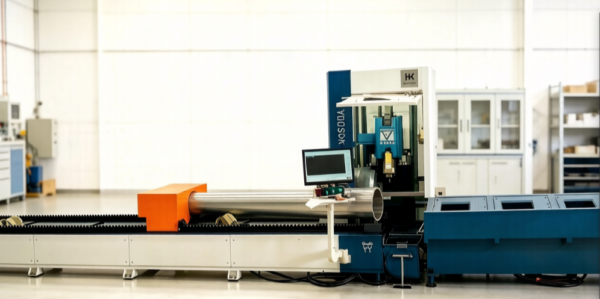
cnc laser tube pipe cutting
CNC Laser Tube Cutting is a precision manufacturing process that uses a high-energy laser beam to cut tubes, pipes, and structural sections with extreme accuracy.
⚙️ How It Works – From Design to Finished Part
The process integrates a high-power laser, precision mechanics, and intelligent software:
-
Design & Programming – An engineer creates a 3D model in CAD software. CAM software then “unwraps” all features (holes, slots, contours) onto the tube surface and generates G‑code that includes laser paths, rotation angles, and feed rates.
-
Loading & Clamping – The tube is fed into the machine and securely gripped by self‑centering chucks.
-
Rotation & Cutting – Under CNC control, the C‑axis (rotational axis) rotates and advances the tube while the laser head moves radially to cut in real time.
-
Assist Gas & Completion – Assist gas (nitrogen, oxygen, or air) blows away molten or vaporized material, producing a clean, burr‑free cut. Complex parts are often completed in one machine without secondary operations.
📊 Core Components & Performance Indicators
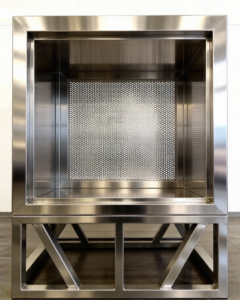
| Component | Function & Features | High‑End / Key Impact |
|---|---|---|
| ⚡ Laser Source | The energy heart; determines cuttable materials, thickness, and quality. | Fiber laser – 30-50% electrical efficiency, excellent beam quality, low maintenance – current market standard. CO₂ laser – still advantageous for very thick plates (>30 mm) but increasingly replaced by high‑power fiber lasers. |
| 🔩 Chuck System | Grips and drives tube rotation/feeding; critical for precision, efficiency, and material utilization. | 2‑chuck: simple, lower cost, longer remnant. 3‑chuck: good balance of cost & performance, shorter remnant – ideal for most production. 4‑chuck: highest stability & automation for long/heavy tubes, but higher cost. |
| 🎯 Laser Power | Directly affects cutting speed and thickness capability. Higher power cuts thicker materials faster. Reflective metals (aluminum, copper) need higher power for stable cutting. | Widely used across industries; construction & automotive have strong demand for high‑power machines. |
| 🖥️ Software | The control brain – processes 3D models, optimises nesting (cut paths), and coordinates all moving parts. | Intelligent software auto‑recognises tube profiles, compensates for material distortion, manages loading/unloading and part sorting – key to automation. |
🎯 Main Applications
CNC laser tube cutting is widely adopted thanks to its precision, speed, and one‑step finishing.
| Industry | Examples |
|---|---|
| 🚗 Automotive | Chassis parts, roll cages, exhaust systems – one of the largest users. |
| ✈️ Aerospace | Lightweight structural components, wing spars – demanding high accuracy & weight reduction. |
| 🏗️ Construction & Structures | Large structural steel, building facades, railings – supports custom designs and rapid production. |
| 🛋️ Furniture & Design | Modern metal furniture, display racks – clean edges improve aesthetics. |
| 🚜 Heavy Machinery & Agriculture | Agricultural equipment, heavy truck parts – thick‑wall tube cutting. |
| 🌡️ HVAC & Piping | Manifolds, fittings – precise cutting for piping systems. |
| 🔌 Electrical & Energy | Electrical cabinet frames, cable trays, energy equipment (power, oil & gas). |
🔍 How to Choose the Right CNC Laser Tube Cutter
Selection is a strategic investment – match your production needs to the machine’s capabilities.
1. Define your production requirements
Gather real data, not just wish‑list specs:
-
Min / max tube diameter
-
Common materials (steel, stainless, aluminum, copper, etc.)
-
Typical wall thickness
-
Section shapes (round, square, rectangle, channel, angle, etc.)
-
Expected monthly output
Example: A furniture shop prioritises fast changeovers and small‑diameter processing, while a steel structure fabricator needs large diameters, thick walls, and long‑length capability.
2. Evaluate key parameters
Laser power is the most critical. Use the table below as an initial guideline for mild steel (actual performance varies with material, assist gas, and machine quality):
| Laser Power | Cut thickness (mm) | Cutting speed (m/min) |
|---|---|---|
| 1 kW | 0.5 – 3 | 3 – 6 |
| 2 kW | 1 – 6 | 4 – 8 |
| 3 kW | 2 – 10 | 5 – 10 |
| 4 kW | 3 – 12 | 6 – 12 |
| 6 kW+ | 8 – 25+ | 10 – 25+ |
-
For stainless steel, similar thicknesses require slightly more power.
-
For aluminum, add 30‑50% more power to maintain speed.
3. Choose your automation level
| Level | Description | Best for |
|---|---|---|
| Entry / Manual | Manual loading/unloading | Job shops, prototyping, small batches, many different profiles. |
| Production / Semi‑auto | Automatic loading + unloading & sorting | Batch production – reduces labour cost and idle time. |
| Full automation / Lights‑out | Integrated storage tower + AGV + MES | High‑volume, 24/7 production with minimal human intervention. |
4. Other critical considerations
-
Machine rigidity – The bed must be heavy welded steel with stress relief to maintain long‑term accuracy under high dynamics.
-
Software usability – Ensure it seamlessly integrates with your existing CAD/CAM workflow.
-
Test cuts – Ask the supplier to cut your actual parts. Inspect cut quality, accuracy, and material utilisation.
-
Support & training – Check installation, training, and after‑sales service capabilities.
📌 Laser Tube Cutting vs. Plasma Tube Cutting
For industrial buyers, understanding the difference is essential.
| Feature | CNC Laser | CNC Plasma |
|---|---|---|
| Precision | Very high (tolerances ±0.1 mm or better) | Low – moderate (rough edges) |
| Cut quality | Smooth, clean, burr‑free | Rough, often requires grinding |
| Heat affected zone | Very small | Large |
| Speed | Fast on thin to medium walls | Faster on very thick walls (>25 mm) |
| Material types | Steel, stainless, aluminium, brass, copper, titanium | Mostly conductive metals (steel, stainless, aluminium) |
| Typical applications | Automotive, aerospace, precision components | Heavy structural steel, shipbuilding, where finish is not critical |
| Cost | Higher initial investment, lower running cost per part (narrow kerf, no consumable electrodes) | Lower investment, higher consumable cost (electrodes, nozzles) |
Note: If your product involves bending, laser cutting is usually performed before the bending operation.