Specialized in the production and supply of a full range of aluminum profiles and metal fabrication
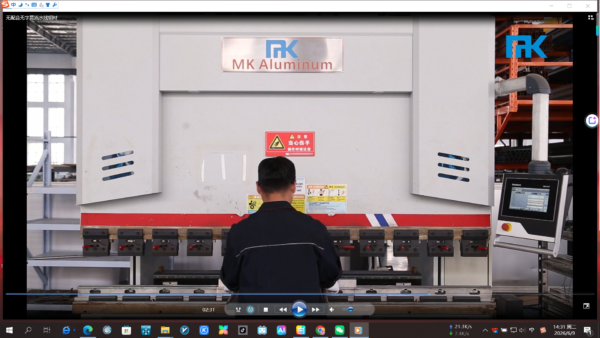
Aluminum alloy Metal Sheet bending
Sheet metal bending is a manufacturing process that permanently deforms a flat sheet of metal along a straight axis to create an angled shape, such as a V‑shape, U‑shape, or channel. It is typically performed on a press brake and is used to produce brackets, enclosures, chassis, and countless other components.
×
Category: Sheet Metal Fabrication
Tag: Metal Sheet bending
Sheet Metal Bending – A Complete Overview
🔍 What Is Sheet Metal Bending?
Sheet metal bending is a manufacturing process that permanently deforms a flat sheet of metal along a straight axis to create an angled shape, such as a V‑shape, U‑shape, or channel. It is typically performed on a press brake and is used to produce brackets, enclosures, chassis, and countless other components.
Unlike cutting or punching, bending does not remove material – it changes its geometry through plastic deformation.
⚙️ How It Works – The Basics
A sheet metal blank is placed on a die (a V‑shaped or U‑shaped tool). A punch (the upper tool) presses the sheet into the die, exceeding the material’s yield strength but not its ultimate tensile strength, so the metal takes a permanent bend.
The CNC press brake controls:
-
Ram position (bending depth)
-
Backgauge position (to locate the bend line accurately)
-
Bending force (tonnage)
-
Bending speed
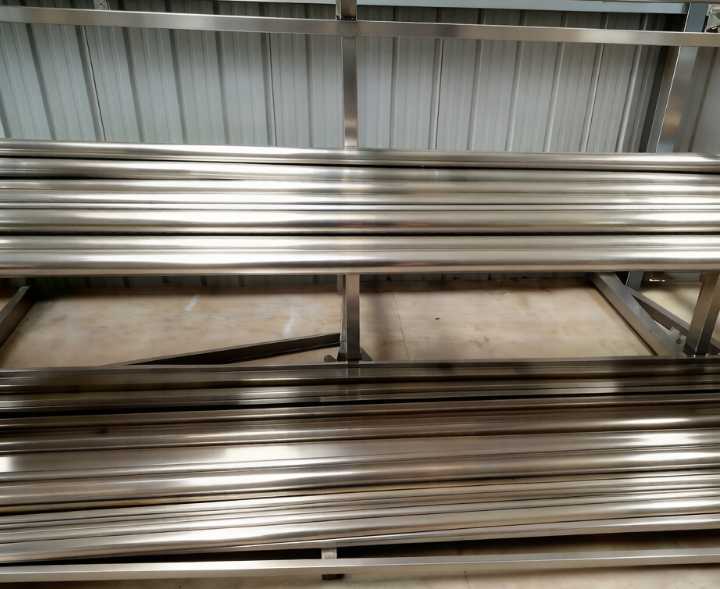
📐 Three Main Bending Methods
| Method | Description | Characteristics |
|---|---|---|
| Air bending | The punch does not fully seat the sheet into the die. The bend angle is determined by how deep the punch penetrates. | Most common (~70% of jobs). Lower tonnage required. Angle accuracy depends on material thickness & grain direction. |
| Bottoming | The punch forces the sheet to the bottom of the die, creating a precise angle (usually 90°). | Higher tonnage needed. Very consistent angle. Good for high‑volume production. |
| Coining | Extreme pressure at the end of the stroke embosses the bend line, removing springback almost completely. | Highest tonnage. Excellent precision (±0.5°). Die and punch match the final angle exactly. |
Springback – After bending, metal tries to return slightly toward its original shape. CNC press brakes automatically compensate for springback by over‑bending.
🧮 Key Parameters & Calculations
To produce accurate bends, engineers calculate:
1. Bend Allowance (BA)
The length of the neutral axis through the bend. It determines the flat pattern length.
BA = (π/180) × (R + K×T) × A
Where:
-
R= inside bend radius -
K= K‑factor (neutral axis position, typically 0.33–0.5) -
T= material thickness -
A= bend angle (degrees)
2. Bend Deduction (BD)
The amount subtracted from the sum of flange lengths to get the flat length.
Flat length = Flange A + Flange B – BD
3. Minimum Bend Radius
The smallest internal radius possible without cracking. Rough rule:
-
Soft materials (aluminum, mild steel): radius ≈ 1× thickness
-
Harder materials (high‑strength steel, brass): radius ≈ 2–3× thickness
4. Required Tonnage
Force needed to bend the sheet. Approximate formula for V‑die air bending:
Tonnage (metric tons) = (1.42 × Tensile strength (kg/mm²) × Material thickness² × Die width) / 1000
Most CNC press brakes provide tonnage charts.
🏭 Types of Press Brakes (Bending Machines)
| Type | Drive mechanism | Pros | Cons |
|---|---|---|---|
| Mechanical | Flywheel + clutch | Fast, simple | Not precise, noisy, dangerous (no overload protection) – mostly obsolete |
| Hydraulic | Hydraulic cylinders | High tonnage, controllable, safe | Slower, uses more energy |
| Electric servo | Servo motors + ballscrew or belt | Very energy efficient (50‑70% less energy), fast, precise, quiet | Lower max tonnage (typically <150 tons) |
| Hybrid (electro‑hydraulic) | Servo‑driven hydraulic pump | Best of both – energy efficient + high tonnage | More complex, higher cost |
Today’s standard:
-
General fabrication → Hydraulic or hybrid
-
High‑speed, light‑gauge work → Electric servo
-
Heavy plate (>½″ thick) → Hydraulic
🔧 Tooling (Punches & Dies)
Common punch shapes
| Punch type | Use |
|---|---|
| Sharp / acute (30‑45°) | Air bending, acute angles |
| Straight / 88° | General purpose, 90° bends |
| Gooseneck | Avoids collision with previously bent flanges |
| Forming punch | U‑bends, offsets, hemming |
Common die types
| Die type | Features |
|---|---|
| V‑die | Most common – size (opening) chosen as 6‑8× material thickness |
| U‑die | For U‑channels |
| Offset die | For Z‑bends |
| Rocking / radius die | Creates large radii without special tooling |
Precision tooling considerations
-
Ground tooling – High accuracy, low burrs.
-
Segmented tooling – Standard length segments (e.g., 100 mm, 200 mm, 400 mm) that can be arranged to any total length.
📏 Typical Bend Tolerances (CNC press brake)
| Parameter | Typical tolerance |
|---|---|
| Bend angle | ±0.5° to ±1° |
| Flange length | ±0.1 mm to ±0.3 mm |
| Bend position (backgauge) | ±0.05 mm to ±0.1 mm |
High‑precision machines with laser feedback can achieve ±0.25° and ±0.05 mm.
🧪 Materials & Their Bending Behavior
| Material | Bending characteristics |
|---|---|
| Mild steel (DC01, SPCC, Q235) | Excellent – wide bend window, forgiving |
| Stainless steel (304, 316) | Requires more tonnage, less springback than mild steel; work‑hardens |
| Aluminium (5052, 6061) | Soft, low tonnage, but can crack if bend radius too tight (5052 is more formable than 6061) |
| High‑strength steel (HSLA, DP, TRIP) | High springback, requires larger bend radius, higher tonnage |
| Brass & copper | Soft, easy to bend, but work‑hardens quickly |
Grain direction – Bending perpendicular to the rolling grain direction reduces risk of cracking. Always check grain orientation for critical bends.
🎯 Common Applications
| Industry | Typical bent parts |
|---|---|
| Automotive | Brackets, chassis rails, battery trays, door panels |
| Electronics | Server chassis, instrument enclosures, back panels |
| HVAC | Ducting flanges, air handler frames, grilles |
| Medical | Equipment housings, trolley frames |
| Furniture | Metal frames, desk legs, shelving brackets |
| Construction | Roof flashing, gutters, structural angles |
📝 How to Choose a Press Brake for Sheet Metal Bending
1. Determine your typical work
-
Thickness range – Light gauge (<3 mm), medium (3–6 mm), or heavy (>6 mm)
-
Max sheet length – Common bed lengths: 1250 mm, 2500 mm, 3100 mm, 4000 mm
-
Material types – Mild steel, stainless, aluminium, etc.
2. Calculate required tonnage
-
Use the press brake manufacturer’s chart or formula.
-
For air bending mild steel:
Tonnage = (Thickness² × Die opening) / 2500(approx., metric tons) -
Example: 3 mm mild steel, V‑die = 24 mm → ~(3²×24)/2500 ≈ 0.86 tons per 100 mm → for 3 m length → ~25.8 tons.
3. Choose the right drive type
| Thickness / volume | Recommended drive |
|---|---|
| Thin sheet (<3 mm), high speed | Electric servo |
| Mixed thickness, general fab | Hydraulic or hybrid |
| Thick plate (>6 mm), heavy duty | Hydraulic (large cylinder) |
4. Consider additional features
-
CNC backgauge (6 axes or more for complex bends)
-
Crowning table – Compensates for deflection in long beds; essential for long parts.
-
Laser safety protection – Light curtains or area scanners.
-
Tooling library – Automatic tool recognition and setup.
5. Budget & brands
-
Entry / Chinese – $15k–$50k (e.g., Accurpress, Cincinnati clones)
-
Mid‑tier / Taiwanese – $50k–$120k (e.g., YSD, LVD)
-
Premium European/Japanese – $120k–$400k+ (e.g., Amada, TRUMPF, Bystronic, Prima Power)
❗ Common Defects & Solutions
| Defect | Cause | Solution |
|---|---|---|
| Cracking | Bend radius too tight, or grain direction wrong | Increase radius, bend across grain, anneal material |
| Springback variation | Inconsistent material properties | Use coining or bottoming, or active crowning |
| Slippage / position error | Backgauge drift or sheet movement | Check backgauge calibration, use rear stops or clamps |
| Scratches on face | Sharp tooling or dirty dies | Polish tools, apply protective film, clean dies |
| Uneven angle along length | Die or punch deflection (lack of crowning) | Enable hydraulic crowning or use a crowned die |
💎 Summary – Why CNC Sheet Metal Bending?
-
Speed – Minutes per bend in manual; seconds per bend on CNC.
-
Accuracy – Repeatable to ±0.1 mm – essential for assembly.
-
Flexibility – One machine can produce thousands of different part shapes.
-
Integration – Works seamlessly with laser cutters, punches, and welding cells.