Specialized in the production and supply of a full range of aluminum profiles and metal fabrication

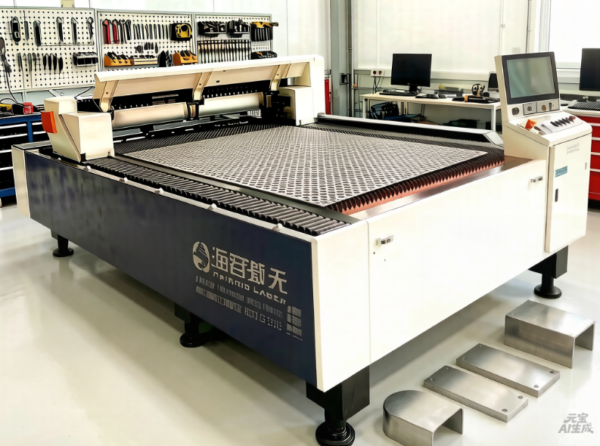
Aluminum alloy cnc sheet metal laser cutting machine
What Is a CNC Sheet Metal Laser Cutting Machine?
A CNC sheet metal laser cutting machine is a computer‑controlled system that uses a high‑power laser beam to cut flat metal sheets with high precision and speed. It is one of the most common and essential tools in modern sheet metal fabrication.
🔬 How It Works
-
Design & Programming – A 2D or 3D CAD drawing of the part is created. CAM software then generates a cutting path (G‑code), arranging parts efficiently on the sheet (nesting) to minimise waste.
-
Laser Generation – The laser source (usually a fiber or CO₂ laser) produces a concentrated beam of light. This beam is directed through a series of mirrors or a fiber optic cable to the cutting head.
-
Focusing & Cutting – A focusing lens concentrates the beam into a tiny spot (often <0.1 mm) on the sheet surface. The intense energy melts, burns, or vaporises the material.
-
Assist Gas – A high‑pressure gas (oxygen, nitrogen, or compressed air) is blown through the nozzle to:
-
Blow away molten material from the kerf.
-
Shield the focusing lens from debris.
-
Enhance cutting quality and speed.
-
-
Motion Control – The CNC system moves the cutting head over the sheet in the X and Y axes (and sometimes Z for height following). High‑end machines also tilt the head for bevel cuts (3D or 5‑axis capability).
📊 Core Components & Technology
| Component | Function | Typical Options / Considerations |
|---|---|---|
| Laser Source | Generates the cutting beam. | Fiber laser – 30‑50% electrical efficiency, low maintenance, compact, ideal for metals (steel, stainless, aluminium, brass, copper). CO₂ laser – older technology, higher maintenance, better for very thick plates (>20‑25 mm) or non‑metals (wood, acrylic). |
| Cutting Head | Focuses the beam and delivers assist gas. | Autofocus heads adjust focal position automatically for different thicknesses. Some have height sensors to maintain constant nozzle‑to‑work distance. |
| CNC Controller | Executes the cutting program, controls motion, speed, power, gas. | Common brands: Beckhoff, Siemens, FANUC, or proprietary systems. |
| Motion System | Moves the cutting head accurately. | Linear motors (fastest, most accurate) or precision ballscrews + servo motors. High‑quality machines use ground linear rails and helical racks. |
| Worktable | Supports the sheet. | Typically a slatted table (exchangeable or fixed). Some have pallet changers for continuous operation. |
| Exhaust System | Removes fumes, smoke, and dust. | Essential for safe operation, often integrated into the cutting bed. |
| Chiller | Cools the laser source and optics. | Maintains stable temperature – critical for power consistency and component life. |
✅ Key Advantages Over Other Cutting Methods
-
High precision – Tolerances as tight as ±0.03 mm to ±0.1 mm, depending on thickness and machine.
-
No tool wear – The laser beam never dulls; no consumable cutting tools.
-
Narrow kerf – As small as 0.1–0.3 mm, minimising material waste.
-
Burr‑free edge – Clean, square edges that often require no secondary finishing.
-
High speed – Can cut thin sheet (1–2 mm) at 10–30 m/min.
-
High flexibility – No tool change needed; cut any 2D shape from the same program.
-
Low heat input – Small heat‑affected zone (HAZ), reducing distortion.
-
Automation ready – Easily integrated with automatic loading/unloading, storage towers, and nesting software.
🎯 Typical Applications (Sheet Metal Focus)
| Industry | Typical Parts |
|---|---|
| Automotive | Chassis brackets, door panels, exhaust flanges, battery enclosures (EV) |
| Electronics | Enclosures, chassis for servers, instruments, power supplies |
| Medical | Surgical instrument trays, equipment housings, racks |
| HVAC | Ducting flanges, grilles, fan housings |
| General Fabrication | Enclosures, cabinets, control panels, brackets, guards |
| Agricultural machinery | Harvester components, shields, brackets |
| Kitchen equipment | Stainless steel worktops, oven parts, sink components |
| Signage & art | Letters, logos, decorative panels |
⚡ Laser Power & Cutting Thickness Guide (Mild Steel)
This is a practical guideline for fiber lasers:
| Laser Power | Max. mild steel thickness (quality cut) | Recommended thickness range | Approx. speed (1 mm sheet) |
|---|---|---|---|
| 1 kW | 6–8 mm | 0.5–4 mm | 6–10 m/min |
| 2 kW | 10–12 mm | 1–6 mm | 10–15 m/min |
| 3 kW | 14–16 mm | 1–10 mm | 15–20 m/min |
| 4 kW | 18–20 mm | 2–12 mm | 20–25 m/min |
| 6 kW | 22–25 mm | 2–16 mm | 25–30 m/min |
| 10 kW+ | 30–40 mm | 3–25 mm | 30+ m/min |
For stainless steel – similar thickness with slightly higher power or nitrogen assist.
For aluminium – add 30‑50% power compared to steel for same thickness (high reflectivity requires careful piercing parameters).
🏭 Automation & Productivity Features
| Feature | Benefit |
|---|---|
| Automatic pallet changer | Load a new sheet while the machine cuts the previous one – near‑continuous operation. |
| Loading/unloading robot | Fully automated material handling, ideal for lights‑out manufacturing. |
| Smart nesting software | Optimises material utilisation (often >85‑90%), reduces waste. |
| Remote monitoring | Track machine status, utilisation, and maintenance alerts via mobile or PC. |
| Bevel cutting head (5‑axis) | Cut chamfers and weld preparations in one setup. |
📝 How to Choose a CNC Sheet Metal Laser Cutter
1. Know your material and thickness
-
Mainly thin sheet (<6 mm) – 1‑3 kW fiber laser is cost‑effective and fast.
-
Mixed thickness up to 12‑16 mm – 3‑4 kW offers good balance.
-
Thick plates (16‑25+ mm) regularly – 6 kW or higher.
-
Aluminium or copper – plan for at least 3‑4 kW, preferably with adjustable pulse shaping.
2. Worktable size
-
Choose a table that fits your largest standard sheet (e.g., 1250×2500 mm, 1500×3000 mm, 2000×4000 mm).
-
Consider exchange tables if you need high throughput – you can unload/load on one table while the laser cuts on the other.
3. Laser type – fiber vs. CO₂
-
Fiber laser – dominates the sheet metal market (95%+ of new sales for metals). Lower running cost, faster on thin to medium sheets, and can cut reflective metals.
-
CO₂ laser – only consider if you also need to regularly cut non‑metals (wood, acrylic, leather) or very thick mild steel (>25 mm) and already own CO₂ infrastructure.
4. Precision requirements
-
Standard machines: ±0.05‑0.1 mm/m – sufficient for 95% of sheet metal work.
-
High‑precision (e.g., medical, aerospace): look for linear motor drives and absolute encoders (±0.03 mm).
5. Budget & brand
-
Entry / Chinese brands (e.g., Bodor, HSG, Jinan Senfeng, Rayso) – $20,000 – $60,000. Good value for general fabrication.
-
Mid‑tier (Taiwan / Korean) – $60,000 – $120,000 (e.g., Prima Power, Han’s Yueming).
-
Premium European / American – $120,000 – $500,000+ (e.g., TRUMPF, Bystronic, Amada, Mazak). Highest reliability, service, and automation integration.
6. Maintenance & support
-
Fiber lasers have no mirrors, no gas lasers to refill – only cooling system and lens cleaning.
-
Check local service availability, spare parts stock, and training support.
❓ Common Questions
Q: Can a fiber laser cut stainless steel without discoloration?
Yes – using nitrogen assist gas produces a clean, bright, oxide‑free edge. However, nitrogen costs more than oxygen.
Q: What is the difference between laser cutting and plasma cutting for sheet metal?
Laser is far more precise (narrow kerf, minimal HAZ, better edge quality) and cuts faster on thin to medium sheets. Plasma is cheaper but leaves rough edges and a larger HAZ – mostly used for thick plates (>20‑25 mm) where laser becomes slow or uneconomical.
Q: How thick can a fiber laser cut?
Production thickness typically up to 25‑30 mm for mild steel with 6‑10 kW. With 20 kW, some machines can cut up to 40‑50 mm, but speed drops significantly. For very thick plate (>40 mm), plasma or waterjet may be better.
Q: Does laser cutting produce a lot of fumes?
Yes, especially when cutting coated or painted sheets. A proper fume extraction system is essential for safety and machine longevity.