Aluminum bathroom windows are becoming an increasingly important specification for residential, hospitality,
commercial and architectural projects because modern bathrooms are no longer treated as purely functional spaces.
Architects and developers increasingly expect bathrooms to provide daylight, ventilation, privacy, comfort and a
consistent architectural appearance. At the same time, procurement teams need products that can survive humid
conditions, remain easy to maintain and arrive safely after international transportation. These requirements make the
selection of bathroom windows more complex than choosing a standard window from a catalog.
For a B2B buyer, the most important principle is to evaluate the complete window system. Aluminum extrusion is only one
component. The glass, surface treatment, gaskets, drainage, hardware, fasteners, sealants, opening configuration and
installation method all influence performance. A low-cost frame can become an expensive purchase if it creates
installation problems, water leakage, premature hardware failure or inconsistent appearance across a large project.
Therefore, a professional procurement process should begin with a detailed technical specification and end with
sample approval and quality inspection.
1. Understanding the Role of Aluminum in Bathroom Windows
Aluminum is widely used in architectural windows because it combines relatively low weight with useful structural
strength, excellent extrusion flexibility and a wide range of finishing options. This allows manufacturers to create
slim frames, complex channels, drainage paths and integrated hardware interfaces. For bathroom applications, these
characteristics are useful because window openings are often constrained by architectural layouts and privacy
requirements.
A bathroom can have a more aggressive environment than a typical living room. Steam can increase humidity, condensation
can form on cold surfaces, and cleaning products may contact the window frame. In hotels and commercial buildings,
windows may also be operated or cleaned more frequently. These conditions mean that buyers should pay attention to
surface treatment and component compatibility.
2. Ventilation Should Be Designed Before the Window Is Selected
Ventilation is one of the most important long-tail considerations for aluminum bathroom windows. Search terms such as
“aluminum bathroom windows with ventilation,” “aluminum bathroom awning windows,” “aluminum bathroom windows for
humid climates” and “privacy aluminum windows for bathrooms” reflect different user requirements. A B2B buyer should
translate these search concepts into measurable project specifications.
Natural ventilation may be useful, but the amount of ventilation required depends on local regulations and the overall
building system. Mechanical extraction may be required even when an opening window is provided. The window should
therefore be coordinated with the mechanical and architectural drawings.
For example, a top-hung awning window may allow ventilation while reducing direct visibility. A louver configuration
can increase airflow but may provide different acoustic and weather performance from a sealed insulated window.
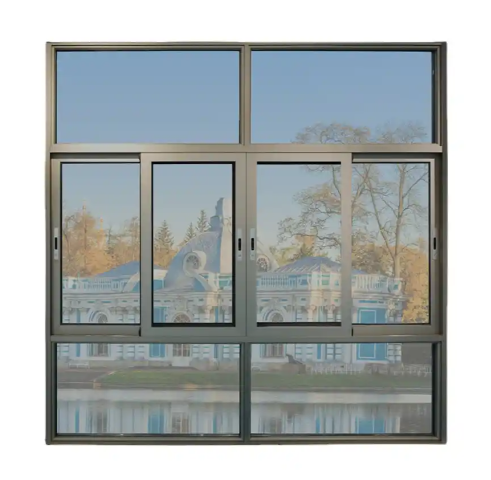
A sliding window can be practical where outward projection is restricted. Each design creates a different balance
between airflow, privacy, weather resistance, cleaning and cost.
3. Privacy Is a Major Commercial Requirement
Bathroom windows are different from bedroom or living-room windows because visibility is often a critical concern.
Privacy can be achieved through glazing, window height, external screening, louvers, blinds or architectural layout.
For many projects, obscure glazing provides a simple solution because it allows daylight while reducing visibility.
Buyers should request actual glass samples rather than selecting privacy glass based only on a product name. Different
patterns can produce very different levels of privacy. The appearance can also change depending on whether the viewer
is standing inside or outside and whether the bathroom is illuminated.
4. Glass Selection for International Projects
Glass should be treated as an engineered component. The correct specification depends on opening dimensions, wind
conditions, safety requirements, thermal performance, acoustic objectives and local regulations. Single glazing may be
appropriate for some low-cost applications, while double glazing can be preferable where thermal or acoustic
performance is more important.
For bathrooms in colder climates, condensation management becomes particularly important. A higher-performing glazing
system can reduce heat transfer, although frame design, installation and indoor humidity remain important. Buyers
should avoid assuming that “double glass” automatically means high energy performance. The complete window U-value
or relevant local performance metric should be evaluated where required.
5. Surface Treatment and Color Consistency
A bathroom window may be exposed to humidity every day, so the surface finish is an important part of the product
specification. Powder coating provides many architectural color options and can support modern residential,
commercial and hospitality designs. Anodizing provides a different metallic aesthetic and is often selected where
the natural character of aluminum is desirable.
Color approval should be based on physical samples. This is particularly important for large developments where
dozens or hundreds of windows need to appear consistent. The extrusion alloy, pretreatment, coating process and
curing conditions can all affect the final appearance.
For projects using international standards, buyers should identify the relevant coating specification in the purchase
documents. Current 2026 industry documents from FGIA and QUALICOAT illustrate the continuing development of technical
requirements for architectural aluminum finishing. This is especially relevant when buyers are comparing suppliers
from different countries.
6. Hardware Is More Important Than Many Buyers Expect
The hardware determines how the user interacts with the window. A handle that feels loose after repeated use can
create complaints even when the aluminum frame itself remains structurally sound. Hinges and rollers need to be
selected according to sash weight and operating cycles. Restrictors may be needed for safety, while locks may be
important in hotels and multi-family buildings.
When comparing quotations, buyers should request a hardware list. The phrase “premium hardware” is not sufficiently
specific for a commercial purchase order. The supplier should identify the hardware material, model or performance
category where appropriate.
7. Gaskets, Sealants and Water Management
Water management is one of the most important technical areas for bathroom windows. A window may experience direct
splashing, condensation or incidental moisture. The frame should be designed to manage water rather than simply trying
to prevent every drop from entering the system.
Drainage channels, weep holes and seals must work together. Installation should not block drainage openings.
Sealants should be compatible with the frame finish, glass and surrounding building materials. For high-value
projects, compatibility should be confirmed with the sealant manufacturer or project consultant.
8. Why Custom Aluminum Bathroom Windows Can Be Valuable
Standard-size windows are useful for projects where openings are repeated. Custom windows become valuable when
architects have unusual opening dimensions or when the building requires a particular proportion. Custom manufacturing
also allows buyers to select colors, glass, handles, opening directions and accessories.
The challenge is that custom products require better engineering coordination. A supplier should review dimensions
and provide shop drawings. The buyer should check the drawing before production. This step can prevent costly mistakes
because an error in one window size can be multiplied across hundreds of units.
9. Aluminum Bathroom Windows for Hotels
Hotels have unique requirements because bathrooms are used by many different guests and maintenance teams. Windows
should therefore be easy to operate, clean and repair. Standardized dimensions can simplify spare-parts management.
A hotel group may also prefer the same handle, gasket and hardware system across multiple properties.
For premium hotels, the visual quality of the frame becomes part of the interior design. Slim profiles, consistent
finishes and carefully selected privacy glass can contribute to the architectural concept. Buyers should coordinate
window details with bathroom fixtures, mirrors, tiles, waterproofing and lighting.
10. Aluminum Bathroom Windows for Apartment Developers
Apartment developers typically focus on cost, delivery, repeatability, compliance and installation speed. A standardized
system with several available sizes can reduce procurement complexity. The factory can manufacture the same profile
family in different dimensions, which may simplify extrusion, finishing and assembly.
The procurement team should prepare a complete window schedule before requesting final prices. It should identify
every opening, quantity, dimensions, glass type, finish and hardware option. This approach enables factories to
calculate material consumption more accurately.
11. Aluminum Bathroom Windows for Villas
Villa projects may provide more freedom for architectural customization. Large bathrooms may use oversized windows
or corner glazing, while privacy may be achieved through landscaping or high-level windows. Premium villas may also
use slim aluminum systems, concealed drainage, special colors or large-format insulated glass.
Because villa projects often have unique architectural details, the supplier should coordinate with the architect
before fabrication. The interface between window frame, waterproofing membrane, wall insulation and interior finish
must be clearly defined.
12. Aluminum Bathroom Windows for Coastal Areas
Coastal environments require special attention because salt-laden air can accelerate corrosion of susceptible
components. Buyers should evaluate not only aluminum profiles but also screws, brackets, hinges, rollers, handles
and other hardware. Surface treatment and cleaning procedures should be appropriate for the exposure.
The correct specification should be determined according to the actual distance from the sea, local environment,
maintenance program and project standards. A generic statement such as “anti-corrosion aluminum” is not enough for a
professional specification.
13. How to Compare Chinese Aluminum Window Suppliers
China has a large aluminum window manufacturing industry, but suppliers differ significantly in specialization,
production capacity, engineering capability and export experience. Buyers should evaluate the factory rather than
selecting solely from online search results.
Useful evaluation criteria include extrusion capability, powder coating or anodizing capability, glass processing,
hardware sourcing, assembly capacity, quality control, packaging, project experience, communication and after-sales
service. If the supplier only sells profiles but does not manufacture complete windows, the buyer should understand
which parts are outsourced.
14. Factory Audit Checklist
A factory audit can review raw material storage, extrusion or sourcing controls, surface finishing, cutting,
machining, assembly, glazing, inspection and packaging. Buyers should also review whether production areas are
organized and whether quality records are maintained.
For large orders, third-party inspection can be considered. The inspection scope can include dimensions, quantities,
surface finish, glass, hardware, operation, packaging and labeling. The inspection criteria should be agreed before
production rather than created after a problem occurs.
15. Packaging and International Shipping
Windows are vulnerable to scratches, corner damage and deformation during transportation. Export packaging should be
designed according to the shipping method. Protective film, corner protection, foam, cartons, pallets and container
loading methods should be considered.
For mixed-size shipments, clear product labels are valuable. Each package can identify project number, window code,
dimensions and quantity. This helps the receiving team identify products quickly and reduces installation errors.
16. How to Write an RFQ for Aluminum Bathroom Windows
A professional RFQ should include project location, product type, dimensions, quantities, opening configuration,
glass, finish, hardware, accessories, packaging and required delivery schedule. If drawings are available, attach
them. If the buyer needs testing or certification, state this clearly.
A useful RFQ might specify: aluminum bathroom awning windows, custom size, powder-coated finish, obscure double
glazing, safety glazing where required, stainless or corrosion-resistant hardware, insect screen if required,
export packaging and shop drawings before production. This level of detail gives suppliers enough information to
prepare comparable quotations.
17. Understanding Price Differences
A quotation can be higher because the supplier uses more aluminum per square meter, a better coating, higher-performance
glass, better hardware, more labor, stronger packaging or additional quality control. The buyer should therefore ask
for a specification comparison rather than simply demanding a lower price.
For repeated projects, it may be useful to establish three specification tiers: standard, enhanced and premium.
This makes budget discussions easier and allows the developer or architect to understand what changes when the price
changes.
18. Sustainability and Low-Carbon Aluminum
Sustainability is becoming more important in international construction procurement. Some aluminum suppliers now offer
lower-carbon material options or increased recycled content. These options can be considered when a project has
embodied-carbon targets.
However, sustainability claims should be documented. Buyers should ask for appropriate environmental documentation
rather than relying on a general “green aluminum” marketing statement. The project team should also evaluate the
relationship between recycled content, material quality, extrusion performance and certification.
19. Current Industry Standards and Procurement Awareness
The fenestration industry continues to update standards. In North America, the 2026 edition of AAMA/WDMA/CSA
101/I.S.2/A440, commonly known as NAFS-26, was published in June 2026. It supersedes the 2022 edition and continues
the industry's five-year review cycle. Buyers serving North American projects should therefore confirm which version
is applicable to their project and how it is referenced by local codes.
For aluminum finishing, 2026 documentation from QUALICOAT and updated FGIA coating specifications provide additional
evidence that finish performance should be specified carefully. These developments are important to commercial buyers
because a window is not only a frame and glass assembly; the surface finish is a major part of its long-term
appearance and protection.
20. The Procurement Decision
The best aluminum bathroom window is not necessarily the most expensive or the cheapest. It is the product that
matches the building's technical requirements, budget, appearance, installation method, environmental exposure and
maintenance strategy.
For a purchasing manager, the most effective strategy is to convert design requirements into measurable specifications.
Define the frame, alloy, finish, glass, hardware, opening, drainage, packaging, testing and documentation. Then send
the same RFQ to qualified suppliers and compare quotations on a like-for-like basis.
For international buyers, the strongest purchasing decision is based on total project value:
product performance + manufacturing quality + documentation + packaging + delivery + installation support.
21. Long-Tail Keyword Topics Buyers Should Consider
Relevant commercial and informational search topics include aluminum bathroom windows, aluminum bathroom window
manufacturer, aluminum bathroom windows supplier, custom aluminum bathroom windows, aluminum bathroom awning windows,
aluminum bathroom sliding windows, aluminum bathroom windows with frosted glass, aluminum bathroom windows for hotels,
aluminum bathroom windows for apartments, aluminum bathroom windows for humid climates, aluminum bathroom windows
wholesale, aluminum bathroom windows from China, aluminum bathroom window factory, powder coated aluminum bathroom
windows, aluminum bathroom windows with privacy glass, energy efficient aluminum bathroom windows and custom
architectural aluminum bathroom windows.
These long-tail topics naturally represent different stages of the purchasing journey. Informational searches tend
to ask why aluminum is suitable, what glass should be used and how ventilation works. Commercial investigation searches
compare suppliers, prices, specifications and materials. Transactional searches focus on manufacturers, wholesale
quotes, custom sizes and factory sourcing. A well-structured page should answer all three intents without excessive
keyword repetition.
22. Final Buyer Checklist
- Confirm project country and applicable regulations.
- Prepare a complete window schedule.
- Define opening type and ventilation strategy.
- Specify privacy requirements.
- Specify glass type and safety requirements.
- Confirm aluminum alloy and extrusion requirements.
- Specify powder coating or anodizing requirements.
- Confirm hardware and operating requirements.
- Review drainage and sealing details.
- Approve physical samples.
- Review shop drawings before production.
- Confirm packaging and container loading.
- Define inspection criteria.
- Confirm documents and testing requirements.
- Compare suppliers on equivalent specifications.
Ultimately, aluminum bathroom windows should be treated as an architectural building component rather than a simple
commodity. A properly specified system can contribute to privacy, ventilation, durability, daylight and visual
quality while remaining practical for large-scale procurement. Buyers who define their requirements clearly can
reduce quotation ambiguity, improve quality control and establish stronger relationships with manufacturers.