Specialized in the production and supply of a full range of aluminum profiles and metal fabrication

sheet metal assembly process

📑 Table of Contents
- 📄 Overview of Sheet Metal Assembly Process
- 📄 Key Stages in Sheet Metal Assembly
- 📄 Common Joining Techniques in Sheet Metal Assembly
- 📄 Advantages of Automated Sheet Metal Assembly
- 📄 Quality Control in Sheet Metal Assembly
- 📄 Cost Factors in Sheet Metal Assembly
- 📄 Data Table: Comparison of Joining Techniques in Sheet Metal Assembly
- 📄 FAQ
- └ 📌 1. What is the most common sheet metal assembly method?
- └ 📌 2. How do I choose between welding and riveting for my project?
- └ 📌 3. What are the common defects in sheet metal assembly?
- └ 📌 4. Can sheet metal assembly be done without welding?
- └ 📌 5. How do I ensure dimensional accuracy in sheet metal assembly?
- └ 📌 6. What materials are best for sheet metal assembly?
- └ 📌 7. How does automation improve the sheet metal assembly process?
- └ 📌 8. What are the finishing options for sheet metal assemblies?
- └ 📌 9. How do I reduce costs in sheet metal assembly?
- └ 📌 10. What safety precautions are needed in sheet metal assembly?
Overview of Sheet Metal Assembly Process
The sheet metal assembly process is a critical manufacturing method used to create durable, lightweight, and complex structures from flat metal sheets. This process involves cutting, bending, and joining metal parts to form final products used in industries such as automotive, aerospace, electronics, and construction. Understanding the key stages—from design to finishing—ensures high-quality output and cost efficiency. Below, I will explore five essential aspects of this process, each presented as a distinct H2 title, followed by a data table summarizing key metrics, and a comprehensive FAQ section.
Key Stages in Sheet Metal Assembly
Sheet metal assembly typically follows a sequential workflow: design, material selection, cutting, forming, joining, and finishing. Each stage requires precision to avoid defects like warping or misalignment. Design engineers use CAD software to create 3D models, which are then translated into flat patterns for laser cutting or stamping. Forming processes like bending or deep drawing shape the metal, while joining methods—welding, riveting, or adhesive bonding—secure parts together. Finally, finishing steps such as deburring, painting, or powder coating enhance durability and appearance.
Common Joining Techniques in Sheet Metal Assembly
Joining is the heart of sheet metal assembly. The most common techniques include:
- Welding: MIG, TIG, and spot welding are popular for strong, permanent joints. Spot welding is ideal for thin sheets, while TIG offers precision for complex parts.
- Riveting: Fast and cost-effective, riveting uses mechanical fasteners to join sheets without heat, reducing distortion risk.
- Adhesive Bonding: Provides a clean finish and distributes stress evenly, often used in automotive panels to reduce weight.
- Self-Clinching Fasteners: These create strong threads in thin metal, allowing for easy disassembly and reassembly.
Each method has trade-offs in strength, cost, and speed, as shown in the table below.
Advantages of Automated Sheet Metal Assembly
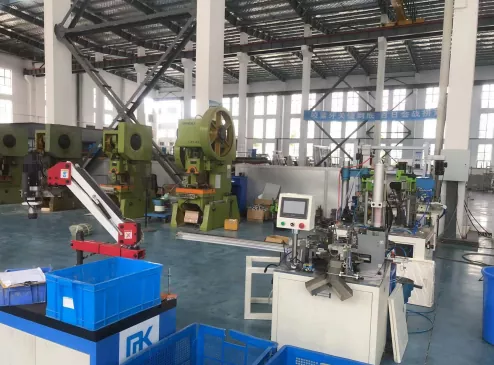
Automation, including robotic welding and CNC bending, significantly improves consistency and throughput. Automated systems reduce human error, increase production speed by up to 40%, and handle repetitive tasks with high precision. For example, robotic arms can perform spot welds in seconds, while automated guided vehicles transport parts between stations. This leads to lower labor costs and higher repeatability, making automation ideal for high-volume production runs.
Quality Control in Sheet Metal Assembly
Quality assurance is vital to prevent failures. Key checks include dimensional accuracy using coordinate measuring machines (CMM), visual inspection for surface defects, and strength testing of joints. Non-destructive testing methods like ultrasonic or X-ray inspection detect internal flaws without damaging parts. Statistical process control (SPC) monitors variables like weld current or bend angle in real-time, ensuring every assembly meets specifications. A robust QC plan reduces scrap rates and warranty claims.
Cost Factors in Sheet Metal Assembly
Costs vary based on material, complexity, and volume. Key factors include:
- Material cost: Steel is cheaper than aluminum or stainless steel, but heavier.
- Tooling: Custom dies and molds for stamping add upfront costs but lower per-unit price for large batches.
- Labor: Skilled workers for welding or assembly increase labor costs, especially for low-volume jobs.
- Finishing: Painting or plating adds 10-20% to total cost.
Optimizing design for manufacturability (DFM) can reduce costs by simplifying bends and minimizing welds.
Data Table: Comparison of Joining Techniques in Sheet Metal Assembly
| Joining Technique | Strength (MPa) | Speed (seconds per joint) | Cost per joint (USD) | Common Applications |
|---|---|---|---|---|
| MIG Welding | 300-500 | 5-10 | 0.50-1.00 | Automotive frames, enclosures |
| Spot Welding | 200-400 | 1-3 | 0.20-0.50 | Sheet metal panels, appliances |
| Riveting | 150-300 | 3-8 | 0.10-0.30 | Aircraft skins, electronic chassis |
| Adhesive Bonding | 100-250 | 30-60 (cure time) | 0.30-0.80 | Automotive panels, white goods |
| Self-Clinching Fasteners | 100-200 | 2-5 | 0.15-0.40 | Computer cases, brackets |
Note: Values are approximate and based on typical industry data for 1mm thick steel sheets. Costs include labor and consumables.
FAQ
1. What is the most common sheet metal assembly method?
The most common method is spot welding, especially in high-volume industries like automotive manufacturing. It is fast, reliable, and cost-effective for joining thin metal sheets. Spot welding uses two electrodes to apply pressure and electrical current, creating a localized weld nugget. This method is preferred for its speed (1-3 seconds per weld) and minimal distortion. However, it requires access to both sides of the joint and is not suitable for thick materials or non-conductive metals. For low-volume or complex assemblies, riveting or adhesive bonding may be used instead.
2. How do I choose between welding and riveting for my project?
Choose welding if you need maximum joint strength and a permanent bond, especially for structural applications like frames or enclosures. Welding is ideal for thick materials (over 2mm) and provides a smooth finish if ground down. Choose riveting if you need fast assembly, disassembly, or are working with heat-sensitive materials like aluminum alloys. Riveting is also better for thin sheets (under 1mm) where welding might cause burn-through. Consider cost: welding has higher setup costs (equipment, shielding gas) but lower per-joint cost for large runs, while riveting is cheaper for small batches. Evaluate your production volume, material thickness, and whether disassembly is needed.
3. What are the common defects in sheet metal assembly?
Common defects include weld spatter, burn-through, distortion, misalignment, and surface scratches. Weld spatter occurs when molten metal droplets adhere to the surface, requiring post-weld cleaning. Burn-through happens when excessive heat melts through the sheet, especially in thin materials. Distortion results from uneven heating and cooling, causing warping. Misalignment occurs when parts are not properly fixtured before joining. Surface scratches can come from handling or tool contact. To prevent these, use proper fixturing, control welding parameters (current, speed), and apply heat sinks for thin sheets. Regular inspection and process optimization are key to reducing defects.
4. Can sheet metal assembly be done without welding?
Yes, sheet metal assembly can be done without welding using mechanical fasteners (rivets, screws, self-clinching fasteners), adhesives, or interlocking joints like tabs and slots. These methods are often preferred for applications where heat damage is a concern, such as electronics or painted surfaces. Adhesive bonding distributes stress evenly and provides a clean aesthetic, but requires longer cure times. Mechanical fasteners allow for easy disassembly and repair. For example, computer cases use self-clinching fasteners for motherboard mounts, while aircraft use rivets to avoid heat-affected zones. Each method has trade-offs in strength, cost, and production speed.
5. How do I ensure dimensional accuracy in sheet metal assembly?
Ensure dimensional accuracy by using precision cutting tools (laser or waterjet), CNC bending machines, and robust fixturing during assembly. Design parts with tolerances that match your manufacturing capability—typically ±0.1mm for laser cutting and ±0.5mm for bending. Use coordinate measuring machines (CMM) or laser scanners to inspect critical features after each step. Implement statistical process control (SPC) to monitor key variables like bend angle or weld position. Also, consider springback in bending—allow for slight overbending to compensate. Regular calibration of tools and dies is essential. A well-designed assembly sequence minimizes cumulative errors.
6. What materials are best for sheet metal assembly?
The best materials depend on the application. Steel (mild, stainless, or galvanized) is strong, affordable, and easy to weld, making it ideal for structural parts. Aluminum is lightweight and corrosion-resistant, perfect for aerospace and automotive panels, but requires careful welding to avoid cracking. Copper and brass are used for electrical components due to conductivity. For outdoor use, stainless steel or pre-coated metals (like zinc-plated) resist rust. Thickness matters: 0.5-3mm is typical for most assemblies. Consider formability—aluminum is easier to bend than stainless steel. Cost and weight are also key factors; for example, high-strength steel reduces weight but increases tooling wear.
7. How does automation improve the sheet metal assembly process?
Automation improves speed, consistency, and safety. Robotic welding arms can perform hundreds of welds per hour with precision, reducing human error and rework. Automated guided vehicles (AGVs) transport parts between stations, streamlining workflow. CNC bending machines produce repeatable bends within tight tolerances. Automation also handles hazardous tasks like heavy lifting or welding fumes, improving worker safety. For high-volume production, automation can reduce labor costs by up to 60% and increase throughput by 40%. However, initial investment is high, so it is best suited for long production runs. Small manufacturers may use semi-automated cells for flexibility.
8. What are the finishing options for sheet metal assemblies?
Common finishing options include powder coating, painting, anodizing, and plating. Powder coating provides a durable, chip-resistant finish in various colors, ideal for outdoor or industrial products. Painting offers more color options but may be less durable. Anodizing is used for aluminum, creating a corrosion-resistant oxide layer that can be dyed. Plating (zinc, nickel, or chrome) adds wear resistance and improves appearance. Other options include deburring to remove sharp edges, and passivation for stainless steel to enhance corrosion resistance. The choice depends on aesthetics, environmental exposure, and budget. For example, automotive parts often use powder coating for durability, while electronics may use anodizing for heat dissipation.
9. How do I reduce costs in sheet metal assembly?
Reduce costs by optimizing design for manufacturability (DFM): simplify part geometry, minimize bends, and use standard fasteners. Choose cost-effective materials like mild steel instead of stainless steel when possible. Increase batch sizes to amortize tooling costs. Use automation for repetitive tasks to lower labor costs. Reduce scrap by nesting parts efficiently on sheets and using laser cutting for minimal waste. Also, consider outsourcing high-volume runs to specialized shops that have economies of scale. For low-volume projects, avoid complex dies and use manual bending or riveting. Finally, negotiate with suppliers for bulk discounts on materials and fasteners.
10. What safety precautions are needed in sheet metal assembly?
Safety precautions include wearing personal protective equipment (PPE) like gloves, safety glasses, and hearing protection. Handle sharp edges with care to avoid cuts—use deburring tools after cutting. For welding, use welding helmets with proper shade, fire-resistant clothing, and ensure adequate ventilation to avoid fume inhalation. Keep flammable materials away from welding areas. For machinery like presses and brakes, use guards and emergency stop buttons. Train workers on proper lifting techniques to avoid back injuries. Regular maintenance of equipment prevents malfunctions. Also, follow lockout/tagout procedures when servicing machines. A safety-first culture reduces accidents and improves productivity.
For more information on sheet metal assembly processes or to discuss your specific project requirements, please contact the manufacturer: Email: cnaluprofile@163.com, Phone: +86-13651855050.