Specialized in the production and supply of a full range of aluminum profiles and metal fabrication
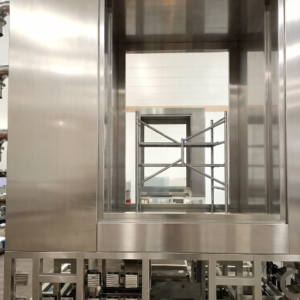
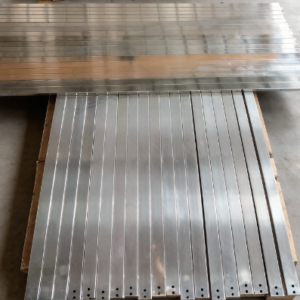
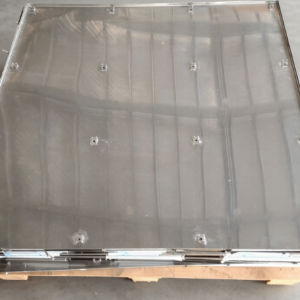
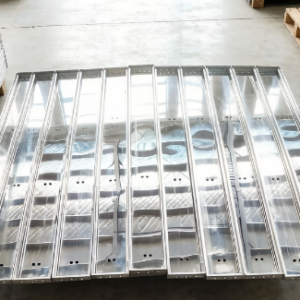
Custom PV mounting bracket
📑 Table of Contents 📄 What Is a Custom PV Mounting Bracket? 📄 Topic 1:…
Specialized in the production and supply of a full range of aluminum profiles and metal fabrication
Specialized in the production and supply of a full range of aluminum profiles and metal fabrication

Factory-direct supply, custom sizing, and verified performance data for procurement teams worldwide.
Get a quoteEverything buyers need to specify fixed aluminum glazing correctly — from U-values and glazing options to structural limits and project applications.
Picture windows are fixed units with no moving parts, which means the frame is the primary thermal bridge. A thermally broken aluminum frame inserts a polyamide strip (typically PA66 GF25) between the interior and exterior aluminum profiles, interrupting the path heat takes through the frame. This reduces condensation risk and improves whole-window U-values significantly compared to non-thermal-break profiles.
For projects specifying Low-E glazing and argon filling, thermally broken picture windows can achieve U-values as low as 0.28 (W/m²K) depending on configuration[reference:0]. Double-glazed units with a 5+12A+5 configuration and thermal break frames commonly land in the 1.4–1.8 W/m²K range for budget-oriented residential work, while triple-glazed premium units push closer to 0.8–1.2 W/m²K. The frame-to-glass ratio matters: because picture windows eliminate sashes, hinges, and locking hardware, the frame profile can be simplified, and overall thermal performance is typically better than any operable window in the same product family[reference:1].
Target U-values depend on climate zone and building code. In North America, ENERGY STAR thresholds for the northern zone require U-values ≤0.30 for fixed windows; in Europe, Passive House certification demands ≤0.80 W/m²K for the complete window unit. For commercial curtain-wall-adjacent picture windows, ASTM and AAMA ratings govern structural performance, while thermal values are often driven by local energy codes. Buyers should request a certified simulation report (NFRC, CSA, or equivalent) rather than relying on center-of-glass values alone.
Picture windows maximize daylight, but they also admit solar heat. In cooling-dominated climates, specify Low-E coatings with a low SHGC (0.24–0.36) and consider tinted or reflective glass on east- and west-facing elevations. In heating-dominated climates, a higher SHGC (0.40–0.55) can reduce winter heating loads. The U-value and SHGC trade-off should be modeled per elevation, not applied uniformly across a building.
Fixed aluminum picture windows support larger glass areas than operable units, but structural limits still apply. As a working rule: openings up to 1,500 mm can use 5 mm tempered glass; 1,500–2,500 mm requires 6 mm tempered; 2,500–3,500 mm needs 8 mm tempered or 6.38 mm laminated; and spans above 3,500 mm call for 10 mm tempered or 8.76 mm laminated glass with a reinforced frame and structural engineering verification[reference:2].
Standard aluminum picture window frame depths range from 45 mm to 90 mm. Residential applications typically use 45–60 mm profiles, while commercial facades and high-rise installations require 70–90 mm frames with wall thicknesses of 1.8–2.0 mm or greater. For coastal and high-wind zones, profile thickness may increase to 2.0–3.0 mm, and structural silicone glazing can be specified to achieve a frameless appearance[reference:3].
Common North American picture window sizes include 24″×24″, 36″×36″, 36″×60″, 48″×96″, and 72″×72″[reference:4]. However, custom manufacturing is standard practice for commercial projects. Aluminum frames and glass panels up to 6 meters in length can be produced, but oversized units require careful planning for transportation (flatbed or container loading), crane access, and on-site installation space[reference:5]. Procurement teams should confirm crane capacity and staging area before specifying monolithic picture windows above 3 meters in any dimension.
Double glazing (e.g., 5+12A+5) is the baseline for most residential and light commercial picture windows. It provides a reasonable balance of cost, weight, and thermal performance. Triple glazing adds a third pane and a second air or argon gap, improving U-value by roughly 30–40% but increasing unit weight by 40–60%. For high-rise or large-span installations, triple glazing may require heavier framing and stronger anchoring, which should be factored into the structural design.
Low-E coatings are microscopically thin metallic oxide layers applied to glass surfaces. They reflect long-wave infrared radiation back into the room in winter and reduce solar heat gain in summer. For picture windows, a soft-coat Low-E (e.g., SB70 or equivalent) on surface 2 or 3 of an insulated glass unit delivers the best balance of U-value and visible light transmission. Hard-coat Low-E is more durable but less thermally effective.
Tempered glass is required for any picture window where the glass area exceeds local safety glazing thresholds (typically within 18 inches of the floor or in large fixed panes). Laminated glass (PVB or SGP interlayer) provides additional security and acoustic benefits. For hurricane-prone regions, impact-rated laminated glass with a minimum 0.090-inch interlayer is mandatory under Miami-Dade NOA and Florida Product Approval protocols[reference:6].
Powder coating is the most common finish for aluminum picture windows. It offers a wide color range (any RAL code), good durability, and low VOC emissions. AAMA 2604-rated powder coats are suitable for residential and light commercial use, while AAMA 2605 (PVDF-based) finishes are recommended for coastal and high-UV environments. Anodizing creates a metallic finish that is harder than powder coat but limited to a narrower color palette (clear, bronze, black, champagne).
Aluminum picture windows have no operating hardware — no hinges, handles, rollers, or locking mechanisms. This eliminates the most common failure points in operable windows: worn seals, misaligned sashes, and broken cranks. For procurement teams, this translates to lower long-term maintenance costs. The only hardware components are setting blocks, EPDM glazing gaskets, and optional structural silicone or dry glazing systems[reference:7].
Fixed picture windows rely on compression gaskets and drained-and-vented frame profiles to manage water infiltration. High-performance systems include EPDM gaskets, weepholes, and sloped sill details. For exposed elevations, specify a minimum AAMA water test pressure rating of 15 psf (some commercial systems achieve 50 psf or higher). Proper installation flashing and sealant detailing are critical — even the best window will leak if the rough opening is not prepared correctly.
In residential design, aluminum picture windows are most valuable in living rooms, dining areas, and stairwells where views and daylight are priorities. Floor-to-ceiling picture windows paired with structural aluminum beams create the “wall of glass” aesthetic popular in contemporary homes[reference:8]. In bedrooms, fixed picture windows are often combined with operable casement or awning units in the same opening to provide both view and ventilation.
Hotels, multifamily developments, and office buildings use aluminum picture windows extensively. A recent Dallas hotel project specified over 620 Crystal Series 8510 fixed windows with 2-⅝-inch frame depth and AW-PG85 structural rating for guest rooms and common areas[reference:9]. The Park at Katy Trail multifamily project in Dallas used 738 Crystal double-hung and picture windows, with the Series 2100 fixed picture window rated CW-PG60 for large openings up to 72 inches wide by 95 inches tall[reference:10].
Aluminum picture windows are well suited to coastal projects when specified with marine-grade finishes (anodized or PVDF powder coat) and corrosion-resistant hardware. In High-Velocity Hurricane Zones (HVHZ), impact-rated laminated glass and Miami-Dade NOA approval are required. Structural silicone glazing can be used to eliminate exterior pressure plates, reducing water and salt accumulation in frame details.
Factory-direct pricing for aluminum picture windows from China ranges from $60–$250 per square meter FOB, depending on system tier. A standard fixed/picture window with non-thermal-break profiles, Chinese-brand hardware, and 5+12A+5 double glazing sits at $60–$85/m². Adding thermal break raises the price to $90–$130/m². High-end specifications with Low-E or triple glazing and German hardware (Siegenia, Roto) reach $140–$180/m²[reference:11].
Purchase price is only 50–70% of the total cost. Shipping from China to North America or Europe adds $5–10/m² for full container loads. Installation adds $15–25/m². Over a 20-year lifecycle, maintenance and energy costs can add another $20–40/m² for economy units, while premium units with better U-values may save $15–30/m² in HVAC costs[reference:12]. Procurement teams should evaluate total 20-year cost, not just initial purchase price.
A transparent quote should break down aluminum profile cost (30–35%), thermal barrier (5–8% if applicable), glass unit (25–35%), hardware/accessories, surface finish, packaging, and inland freight to port. If a supplier provides only a single per-square-meter number, request a line-item breakdown. Quotes that omit the glass specification or profile wall thickness are not comparable and should be rejected.
Side-by-side technical data for three specification tiers commonly quoted for procurement projects.
| Parameter | Economy Tier | Mid-Range Tier | Premium Tier |
|---|---|---|---|
| Profile wall thickness | 1.4 mm | 1.6–1.8 mm | 2.0 mm+ |
| Thermal break | None | PA66 GF25 polyamide | PA66 GF25 polyamide |
| Glazing | 5+12A+5 double, clear | Low-E double, argon | Triple / Low-E, argon |
| U-value range (W/m²K) | 2.0–2.8 | 1.4–1.8 | 0.8–1.2 |
| SHGC range | 0.45–0.60 | 0.30–0.45 | 0.20–0.35 |
| Hardware / accessories | Standard gaskets | EPDM gaskets, setting blocks | Structural silicone option |
| FOB price range (USD/m²) | $60–$120 | $120–$180 | $180–$250 |
| Best for | Budget residential, light commercial | Standard residential, small commercial | High-end residential, commercial facades |
| MOQ (typical) | 50 m² | 50 m² | 50 m² |
| Lead time (production) | 25–35 days | 30–40 days | 35–50 days |
Answers for procurement teams, architects, and developers sourcing fixed aluminum glazing.
The terms are largely interchangeable in the window industry. “Picture window” typically refers to a large, fixed unit designed to frame a view or feature elevation, while “fixed window” is the broader technical classification for any non-operable window. In specification documents, “fixed” is the more precise term because it defines the operating type, while “picture” describes the design intent. Some manufacturers use “picture window” for residential products and “fixed glazing” for commercial curtain wall-adjacent units. For procurement purposes, confirm whether the supplier distinguishes between the two or uses them synonymously.
Yes, with appropriate structural engineering. Aluminum picture windows are used extensively in high-rise residential and commercial projects. The critical factors are wind load calculation, frame depth, profile wall thickness, and glass thickness. For buildings above 10 stories, frame depths of 70–90 mm and wall thicknesses of 2.0 mm or greater are typically required. Structural silicone glazing can eliminate exterior pressure plates, reducing wind-driven water penetration. Crystal Window & Door Systems, for example, supplied Series 5100 fixed picture windows with an AW-PG100 rating for a high-rise development — a rating that indicates the window was tested to withstand 100 psf design pressure[reference:13]. Procurement teams should require a project-specific wind load calculation from the supplier’s engineering team before finalizing specifications.
Performance depends on the thermal break and glazing specification. In cold climates, a thermally broken aluminum frame with a polyamide barrier is essential to prevent condensation and excessive heat loss. Without a thermal break, the aluminum frame acts as a direct conductor, causing interior surface temperatures to drop below dew point and forming condensation. With a thermal break and Low-E triple glazing, U-values can reach 0.8–1.2 W/m²K, which meets or exceeds Passive House requirements. It is also important to specify warm-edge spacer bars in the insulated glass unit — standard aluminum spacers create a thermal bridge at the glass edge, undermining the frame’s thermal performance. For Canadian and northern US projects, look for CSA A440.2 or NFRC certification with energy ratings appropriate to the climate zone[reference:14].
Production lead time for custom aluminum picture windows typically ranges from 25 to 50 days after drawing approval, depending on specification tier and order volume. Economy and mid-range specifications generally ship in 25–40 days, while premium systems with specialized glass or finishes may take 35–50 days. Shipping time adds 15–30 days for sea freight to North America or Europe, depending on port of departure and destination. Air freight is available for urgent samples but is not cost-effective for production orders. Procurement teams should add a 2–3 week buffer for drawing review, sample approval, and pre-shipment inspection. Some suppliers offer North American warehouse stock for standard sizes, which can reduce delivery to 5–10 days but limits customization.
In North America, fixed windows are tested to AAMA/WDMA/CSA 101/I.S.2/A440 (commonly called the AAMA 101 standard). This covers air infiltration (typically tested at 1.57 psf for fixed windows), water resistance (tested at various pressures depending on grade), and structural performance (design pressure rating). AAMA ratings use the format “AW-PGXX” for architectural windows or “CW-PGXX” for commercial windows, where “XX” is the design pressure in psf. For example, a window rated AW-PG85 has been tested to 85 psf design pressure. In Europe, EN 12208 (watertightness) and EN 12207 (air permeability) are the relevant standards. Procurement teams should request the test report, not just the rating, and verify that the tested sample matches the specified configuration.
Installed cost varies widely by market and specification. In the United States, Homewyse estimates fair cost for aluminum picture window installation at approximately $306–$467 per unit for a standard single window, including labor and materials[reference:15]. For commercial projects, installed costs are typically quoted per square meter: $120–$200/m² for economy specifications, $200–$320/m² for mid-range, and $320–$450/m² for premium systems. These figures include the window unit, glazing, installation labor, flashing, and sealant. They exclude structural modifications, scaffolding, and finish work inside or outside the opening. For bulk orders of 500 m² or more, unit costs can decrease by 10–20% compared to single-window pricing.
Yes, and this is a common design strategy. Fixed picture windows can be factory-mulled or field-mulled with casement, awning, or sliding windows to provide ventilation where needed while maintaining large fixed glass areas. The mullion between the fixed and operable unit must be structurally rated to transfer wind loads from the operable sash to the building structure. Factory mulling is generally preferred because the mullion can be engineered and tested as a complete assembly. Field mulling allows for larger openings that would be difficult to ship as a single unit, but requires careful on-site alignment and sealing. For commercial projects, the mullion is often a continuous master frame with an inpost option, allowing vertical and horizontal combinations without compromising structural integrity[reference:16].
Required certifications depend on the destination market. For the United States: NFRC certification for thermal performance, AAMA 101 testing for structural and water performance, and — in Florida and Gulf Coast hurricane zones — Miami-Dade NOA and Florida Product Approval. For Canada: CSA A440.2 for energy performance and CSA A440 for structural performance. For Australia: AS 2047 for windows and AS 1288 for glass. For Europe: EN 14351-1 for CE marking, plus local thermal and acoustic requirements. In addition to product certifications, verify factory quality management: ISO 9001 is the baseline. For commercial projects, ask for a pre-shipment inspection report and a sample of the actual production unit, not just a showroom sample. Suppliers that cannot provide third-party test reports for the specified configuration should be disqualified from bid consideration.
From billet to finished frame — the processes that determine durability and performance.
Aluminum billets (6063-T5 or T6 alloy) are heated to 450–500°C and forced through a steel die to create the frame profile. The extrusion process determines wall thickness, thermal break channel geometry, and glazing pocket dimensions. Tolerances are typically ±0.5 mm on critical dimensions.
Polyamide strips (PA66 GF25) are inserted into the extrusion channel and mechanically crimped or rolled into place. This creates a structural but non-thermal-conductive bridge between interior and exterior profiles. The assembly must pass shear and pull-out tests to ensure structural integrity.
Powder coating involves electrostatic application of dry powder followed by oven curing at 180–200°C. Anodizing uses an electrolytic process to build a controlled oxide layer. Both processes must meet AAMA 2604 or 2605 performance standards for adhesion, impact resistance, and color retention.
Insulated glass units (IGUs) are assembled with a primary seal (butyl), a secondary seal (polysulfide or silicone), and a spacer bar. Low-E coatings are applied in a vacuum chamber. For tempered glass, the pane is heated to 600°C and rapidly cooled, creating compressive stress on the surface and tensile stress in the core.
Extruded profiles are cut to precise lengths using CNC double-head saws, then milled for drainage slots, weepholes, and corner joints. Corner crimping or screw-port assembly creates the finished frame. Every frame is checked for squareness and dimensional accuracy before glazing.
Production units are sampled for air infiltration, water resistance, and structural performance. Surface finish is checked for color and adhesion. Glass is inspected for distortion, coating defects, and seal integrity. Pre-shipment inspection reports are issued with photographs of the actual production units.
Application-specific configurations for residential, commercial, and specialized installations.
Aluminum picture windows are fixed, non-operable glazing units designed to maximize daylight, frame views, and deliver the best thermal performance of any window type. For procurement teams sourcing for residential developments, commercial facades, hospitality projects, or institutional buildings, understanding the technical, financial, and logistical dimensions of picture window sourcing is essential for accurate budgeting and successful project delivery.
This guide covers the full procurement cycle: specification decisions, supplier evaluation, cost analysis, quality assurance, and installation considerations. It is written for buyers who need actionable data, not marketing claims.
Aluminum offers the highest strength-to-weight ratio of any common window frame material. This allows picture windows to support larger glass areas with slimmer frames than wood, vinyl, or fiberglass. A thermally broken aluminum frame with a 70 mm depth can carry a glass pane up to 3.5 meters wide with appropriate glass thickness. The same opening in vinyl would require a much bulkier frame, reducing visible glass area and daylight transmission.
Aluminum is also dimensionally stable. It does not expand or contract significantly with temperature changes, which means seals remain tight and operational tolerances are maintained over decades. It does not rot, warp, or become brittle with UV exposure. For coastal projects, aluminum with an anodized or PVDF finish resists salt corrosion better than most alternatives.

Three specification decisions drive the majority of picture window cost: thermal break, glazing, and frame thickness. Thermal break is the single most important upgrade for cold climates, adding 40–55% to the base profile cost but reducing U-value by 30–50%[reference:18]. Glazing accounts for 25–35% of total unit cost, and moving from clear double to Low-E triple glazing adds $30–$50/m². Frame thickness beyond 1.8 mm adds cost linearly but is required for spans above 2.5 meters and for high-wind zones.
Procurement teams should model the total 20-year cost, not just the FOB price. A premium picture window at $200/m² may have a lower lifetime cost than an economy unit at $80/m² when energy savings, maintenance, and replacement avoidance are included. The break-even point for thermal break and Low-E upgrades in heating-dominated climates is typically 4–7 years for residential projects and 2–4 years for commercial projects with high internal loads.
Sourcing directly from Chinese manufacturers offers significant cost advantages — typically 30–50% below North American or European distributor pricing for equivalent specifications. However, the savings come with due diligence requirements. Verify the factory’s extrusion capability (in-house extrusion is preferred over buying profiles from third parties), thermal break assembly process, and glass sourcing. Request a video walkthrough of the production line and a sample unit from current production, not a showroom mockup.
Quality gates should include: incoming aluminum billet certificate, extrusion dimensional report, thermal break shear test, powder coat adhesion test (ASTM D3359), glass IGU seal test, and finished window air/water test. Pre-shipment inspection with photographs of the actual units, packaging, and container loading is standard practice for reputable suppliers.

Picture windows above 2.5 meters in width require engineering attention. Glass thickness must increase to resist wind load without excessive deflection — typically limited to L/175 or L/240 of the span depending on code. The frame must transfer wind load to the building structure through anchors designed for the calculated design pressure. In seismic zones, the connection between frame and opening must accommodate inter-story drift without glass breakage.
For very large openings, consider splitting the glazing into multiple panes with a structural mullion. This reduces glass thickness requirements, simplifies transportation, and provides a more stable installation. Factory-mulled units are preferred because the mullion can be tested as part of the complete assembly. Field mulling is viable but requires careful alignment and sealing by experienced installers.
Even a premium picture window will underperform if installed incorrectly. The rough opening must be square, plumb, and level within 2 mm. Flashing must integrate with the building’s weather-resistive barrier and drainage plane. Sealant must be compatible with the frame finish and glazing gaskets. For large units, mechanical lifting equipment is required — confirm crane access and staging area before delivery.
Procurement teams should require the supplier to provide installation instructions and, for complex projects, an installation supervisor or detailed installation drawings. Post-installation water testing (AAMA 501.2 or equivalent) is recommended for commercial projects and any residential installation above the first floor.
The global aluminum window market is growing, driven by construction activity in North America, the Middle East, and Southeast Asia. Hindalco Industries, through its Eternia brand, aims for INR 10 billion (USD 119 million) in revenue from its aluminum window business by FY29, reflecting broader market confidence[reference:19]. DERCHI Doors and Windows, a Guangdong-based manufacturer recognized as a “China Famous Brand,” operates a 180,000 m² production base with annual output exceeding 1,000,000 m² and has introduced a patented six-point locking system for picture windows to address security concerns in commercial projects[reference:20].
In North America, demand for larger picture windows is increasing as architects push for more glass and daylight. Crystal Window & Door Systems has supplied fixed picture windows for multiple Dallas-area multifamily and hospitality projects, including The Park at Katy Trail (738 units) and the Sandman Signature Hotel (620+ units)[reference:21]. Alumilex, a Canadian manufacturer, achieved Passive House Institute (PHI) certification for its ALX2090 fixed and operable window system, indicating that ultra-high-performance aluminum windows are moving from niche to mainstream[reference:22].
Aluminum picture windows are a high-value building component that warrants structured procurement. Define performance requirements by climate and code, specify thermal break and glazing accordingly, verify factory capabilities with third-party test reports and production samples, and budget for installation and lifetime costs — not just the unit price. For projects where views and daylight are priorities, picture windows deliver the best combination of aesthetics, thermal performance, and durability of any window type.
Leading manufacturers serving international procurement projects, ranked by production capacity, certification coverage, and export experience.
Guangdong, China. 180,000 m² production base, 1M+ m² annual output. Six-point locking system. Xinhua “China Famous Brand.” Exports to US, Australia, Middle East.
New York, USA. Major supplier to US multifamily and hospitality projects. Series 8510 and 2100 fixed windows with AW-PG85 and CW-PG60 ratings.
Belgium. European leader in architectural aluminum systems. Extensive testing and certification for commercial facades. Premium pricing tier.
China. 20 years OEM/ODM experience. North American warehouse support. Flexible MOQ from 10 units. Custom sizing and finishes.
China. Full range of aluminum windows for commercial and landmark projects. Five-stage inspection. Ships to US, Australia, Canada, Middle East.
Canada. PHI-certified ALX2090 fixed and operable window system. Custom high-performance aluminum for North American market.
China. 20+ years in fixed aluminum windows. Served 4,000+ customers in 50+ countries. 50+ powder coating colors.
China. Fixed/picture window FOB $60–$180/m² depending on system. Published pricing benchmarks for export buyers.
Foshan, China. Custom-size fixed windows, 6063-T5 alloy, 1.4–2.0 mm profile. Any RAL color. U-value 1.2–2.8 W/m²K.
China. In-house extrusion factory. Fixed picture windows up to 6 m. Structural silicone glazing option. Commercial and residential.
Top-rated fixed glazing systems for procurement projects.
A structured five-stage process for buyers sourcing fixed glazing at volume.
Establish U-value, SHGC, wind load, and acoustic targets based on climate zone and building code. Confirm safety glazing and impact requirements for the project location. Document these requirements in a specification sheet before contacting suppliers.
Request factory profile, extrusion capability, certification list, and export references. Verify ISO 9001 and third-party test reports for the specified configuration. Narrow to 3–5 suppliers for detailed quoting.
Require line-item breakdown: profile cost, glass cost, thermal break cost, finish cost, packaging, and FOB port. Reject single-number quotes that cannot be audited. Compare quotes on equivalent specifications only.
Order a production sample, not a showroom unit. Test dimensions, finish adhesion, and glass seal. Approve drawings and place order with agreed inspection and payment terms (typically 30% deposit, 70% before shipment).
Conduct pre-shipment inspection with photographs. Verify packaging protects corners and glass edges. Arrange freight and customs clearance. Provide installation drawings to on-site team. Document as-built conditions for warranty.
Latest analysis on window procurement, specifications, and market trends.
📑 Table of Contents 📄 What Is a Custom PV Mounting Bracket? 📄 Topic 1:…
📑 Table of Contents 📄 5 Key Titles for 4020 Aluminum Extrusion and Their Applications…
📑 Table of Contents 📄 Understanding CNC Machining: A Comprehensive Definition 📄 The History and…
Recent developments from manufacturers, trade publications, and industry sources.
Crystal provided Series 8510 fixed picture windows for the Sandman Signature Hotel in Irving, Texas, achieving U-values as low as 0.28 with AW-PG85 structural rating.
DERCHI Doors and Windows launched patented six-point locking technology for picture windows, addressing demand for secure and energy-efficient building materials.
The Park at Katy Trail received 738 Crystal double-hung and picture windows, with Series 2100 fixed windows rated CW-PG60 for openings up to 72″×95″.
Canadian manufacturer Alumilex received PHI certification for its ALX2090 fixed and operable window system, a first for a Canadian aluminum window product.
Hindalco Industries aims to generate over INR 10 billion (USD 119 million) in revenue from its Eternia aluminum window business by FY29.
Crystal supplied Series 2100 aluminum fixed/picture windows rated CW-PG60 for The Oxbow and The Wayward residential developments in Nashville.