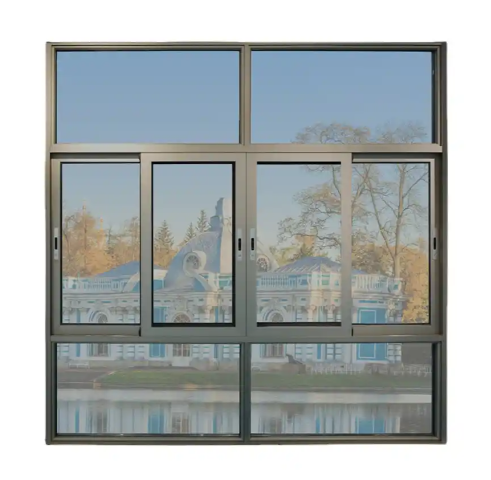
1. Why Aluminum Door Window Products Matter in Modern Architecture
Aluminum door window products occupy an important position in contemporary building design.
Architects use aluminum because extrusion technology allows manufacturers to create precise
profiles, slim sightlines, large glazed areas and highly customized configurations. At the
same time, developers and purchasing managers value the material because it can support
repeatable manufacturing and a wide range of architectural finishes. This combination makes
aluminum suitable for residential houses, apartment buildings, hotels, offices, retail
properties, villas, schools, hospitals and other commercial developments.
However, the term aluminum door window covers a very large range of products. A basic
sliding window and a premium lift-and-slide door may both be described using the same
keyword while having completely different specifications. This is why international buyers
need to look beyond the product name. Profile depth, aluminum alloy, wall thickness,
thermal-break construction, glass, hardware, gaskets, drainage and finishing all influence
the final result.
2. Aluminum Door Window as a Complete System
A professional aluminum door window should be viewed as a complete engineered assembly.
The aluminum profile provides the structural frame, but the finished product depends on
many other components. Glass fills the opening and contributes to thermal, acoustic and
safety performance. Gaskets hold and seal the glazing. Hardware controls operation and
security. Drainage paths manage water. Sealants connect the system with surrounding
building materials. Installation determines how these components interact with the wall.
For procurement, this means a buyer should request a complete specification. Asking only
for “aluminum window price per square meter” can produce misleading comparisons. One supplier
may quote a heavy thermal-break system with insulated Low-E glass while another quotes a
light non-thermal-break frame with single glazing. The prices may look very different even
though both quotations use the same general product name.
3. Aluminum Profiles and Extrusion Technology
Extrusion is one of the major reasons aluminum is attractive for architectural applications.
A die can create channels, chambers, drainage paths and interfaces for gaskets and hardware.
This makes it possible to design profiles for specific performance objectives. For buyers,
the profile drawing is therefore one of the most important technical documents.
Profile depth can affect structural capacity and glazing options. Wall thickness can affect
weight and manufacturing cost. Chamber design can influence thermal performance and drainage.
A profile with a more complicated geometry may require more sophisticated tooling and
production control. Buyers should ask the supplier to identify the profile series and provide
cross-section drawings before finalizing a large order.
4. Aluminum Alloy Selection
Architectural extrusion alloys are selected according to extrusion performance, strength,
surface appearance and finishing requirements. Buyers should specify the alloy according
to the project standard rather than using vague descriptions such as “6063 quality” without
additional context. The selected alloy and temper should be appropriate for the actual
profile and application.
Surface quality can also be important because anodizing and other decorative finishes may
make extrusion imperfections more visible. For projects where appearance is critical, the
buyer should approve samples and understand the supplier's production controls.
5. Powder Coated Aluminum Doors and Windows
Powder coating is a common architectural finish because it provides many color choices.
The process generally involves surface preparation, coating application and curing.
Performance depends on pretreatment, powder system, film thickness, curing conditions and
quality control.
International buyers should specify the required coating standard where the project has
one. QUALICOAT maintains specifications for architectural coating quality, and its 2026
materials include updated requirements and technical information. This demonstrates why
professional purchasing documents should define coating performance rather than simply
specifying a color name.
6. Anodized Aluminum Doors and Windows
Anodizing provides a metallic appearance that is popular in contemporary architecture.
Because the final appearance is affected by the alloy and process, sample approval is
important. Large projects should establish an acceptable visual range rather than expecting
every extrusion batch to appear identical without controls.
Anodized aluminum can be attractive for modern residential and commercial buildings where
the natural character of metal is part of the design language. Buyers should nevertheless
evaluate the finish according to environmental exposure and the project's maintenance
requirements.
7. Thermal-Break Aluminum Door Window Systems
Thermal-break aluminum systems are designed to reduce direct thermal conduction through
the frame. An insulating material separates interior and exterior aluminum sections.
This can improve thermal performance, especially when combined with insulated glazing and
appropriate seals.
The actual result depends on the complete system. Buyers should consider the frame, glass,
spacer, gasket and installation together. Thermal performance should be evaluated using
appropriate project metrics rather than a generic marketing claim.
8. Sliding Aluminum Windows and Doors
Sliding systems are popular because the panels move within the frame and do not require
the same swing clearance as conventional casement doors. This can be useful for balconies,
terraces, bathrooms, kitchens and rooms where furniture is located close to the opening.
For large sliding doors, roller quality is particularly important. Glass weight can be
substantial, so the hardware needs to be selected for the actual sash dimensions. Buyers
should ask for the maximum sash weight and recommended operating conditions where relevant.
9. Casement Aluminum Windows
Casement windows can provide a relatively large opening area and can be useful where natural
ventilation is important. They can also be combined with multi-point locking systems and
high-performance glazing. The outward projection of the sash should be considered in the
architectural layout.
For high-rise projects, external cleaning and wind conditions can influence the appropriate
configuration. Restrictors may also be needed depending on building use and local safety
requirements.
10. Folding Aluminum Doors
Folding aluminum doors are commonly selected when architects want to create a wide opening
between an interior space and a garden, terrace or balcony. Multiple panels can stack to one
side or both sides depending on the system.
The track, rollers, hinges and panel alignment all affect long-term performance. Buyers
should request information about maximum panel dimensions, maximum panel weight and recommended
maintenance. Installation quality is particularly important because even small deviations
can influence the operation of multiple connected panels.
11. Lift-and-Slide Aluminum Doors
Lift-and-slide doors are designed for large glazed panels. The operating mechanism raises
the panel slightly so that it can move along the track. This can allow large openings while
keeping operation manageable.
Large glass panels create logistical considerations during manufacturing, packaging and
installation. Buyers should therefore coordinate delivery access, glass handling equipment
and installation methods before ordering very large units.
12. Aluminum Door Window Glass Selection
Glass selection should be based on the project's actual objectives. Clear glass maximizes
visibility and daylight. Tinted glass can reduce solar transmission and provide a distinctive
appearance. Laminated glass can provide safety and acoustic benefits. Tempered glass is
frequently used where safety glazing is required. Low-E glass can improve thermal performance,
while insulated glass units can improve energy and acoustic characteristics.
The glass specification should include enough information for the manufacturer to identify
the correct product. “Double glass” is normally not enough for a commercial purchase order.
The buyer should define glass thickness, coating, cavity, spacer, gas fill where relevant,
lamination and safety classification.
13. Privacy Glass and Architectural Design
Privacy is particularly important for bathroom windows, bedrooms, healthcare spaces and
certain office environments. Frosted and patterned glass can reduce visibility while
retaining natural light. Buyers should evaluate the privacy level at the actual installation
distance because different glass patterns can produce different results.
Privacy can also be created through high sill positions, external screens, louvers and
architectural landscaping. A complete building design can therefore reduce the need for
heavily obscured glazing.
14. Hardware Quality
Hardware is one of the most frequently operated parts of an aluminum door window. Handles,
hinges, locks, rollers and restrictors need to match the size and weight of the opening.
A premium aluminum frame paired with weak hardware can still result in poor user experience.
Buyers should request a hardware list and, where relevant, identify brands or performance
requirements. For large commercial projects, spare-part availability can be important because
hardware replacement may be required years after installation.
15. Gaskets and Weather Sealing
Gaskets help maintain the seal between frame and glass and between moving components. The
material needs to be compatible with the application and environment. Poor gasket installation
can create air leakage, water penetration and noise problems.
Sealants should also be compatible with the aluminum coating, glass and adjacent construction
materials. For complex façade projects, compatibility testing may be appropriate.
16. Drainage and Water Management
A well-designed aluminum door window manages incidental water through controlled drainage.
Drainage holes and channels should remain unobstructed after installation. The system should
also be coordinated with surrounding flashing, waterproofing and sill construction.
This is particularly important in exposed locations. North American buyers should be aware
that NAFS-26 includes updated requirements around secondary designators, including positive
and negative design pressure and water penetration resistance test pressure. The standard
was published in June 2026 and supersedes the 2022 edition.
17. Acoustic Performance
Noise control is increasingly important in urban buildings. Aluminum frames themselves do
not determine acoustic performance; glass, seals, frame design and installation all matter.
Laminated glass and insulated glass units can be considered when higher acoustic performance
is required.
A buyer should define the required acoustic rating rather than simply asking for “soundproof
windows.” This creates a measurable target for the manufacturer and allows suppliers to
propose suitable glazing configurations.
18. Aluminum Door Window Security
Security requirements vary between residential, commercial and institutional buildings.
Locking points, cylinders, handles, laminated glass and frame construction can all contribute
to security. Ground-floor doors and windows may require a different specification from
upper-floor openings.
Buyers should identify security requirements during the design stage because hardware and
glass choices can influence the profile and reinforcement requirements.
19. Manufacturing Quality Control
Quality control should begin with incoming materials and continue through extrusion,
finishing, machining, assembly, glazing and packaging. Critical dimensions should be checked
at appropriate stages rather than relying only on final inspection.
For international procurement, the buyer can define acceptable tolerances and inspection
procedures in advance. This creates a shared quality standard and makes third-party inspection
more effective.
20. Factory Audit for Aluminum Door Window Suppliers
A factory audit can examine production capability, equipment, raw material control, surface
finishing, machining, assembly, glass processing and packaging. Buyers should also evaluate
engineering communication and document control.
A factory with strong engineering support can be particularly valuable for custom projects.
The ability to respond quickly to shop-drawing revisions can prevent delays and reduce the
risk of incorrect production.
21. How to Prepare an Aluminum Door Window RFQ
An RFQ should include the project country, destination port, product type, quantity, dimensions,
opening type, glass, finish, hardware, accessories and delivery schedule. Drawings and window
schedules should be attached whenever possible.
If a project requires testing or certification, state the requirement before quotation.
Otherwise, different suppliers may calculate prices based on different assumptions.
22. MOQ and Production Quantity
Minimum order quantity varies by manufacturer and product type. Standard systems may have
relatively flexible quantities, while custom extrusion or special finishing may require a
larger commitment because tooling and production setup create fixed costs.
Buyers with several projects can sometimes consolidate quantities to improve pricing and
production efficiency. However, the delivery schedule and storage requirements should also
be considered.
23. Custom Aluminum Doors and Windows
Custom aluminum doors and windows can provide architects with greater design freedom.
Customization may include unusual dimensions, special colors, opening directions, glass,
hardware and profile shapes. Custom extrusion can be particularly useful when a project
requires a proprietary profile.
The main purchasing risk is uncontrolled customization. Every custom requirement should be
documented in drawings and approved before manufacturing. A clear approval process can
prevent misunderstandings.
24. Aluminum Door Window Packaging
International shipments need packaging designed for long-distance transportation. Surface
protection, corner protection, foam, cartons and pallets can reduce damage. The container
loading method should also prevent movement during transit.
Large doors and windows should be supported appropriately. Labels should identify product
codes and quantities. For a large construction project, packaging organization can save
significant installation time at the receiving site.
25. Sustainability and Recycled Aluminum
Sustainability is increasingly relevant to architectural procurement. Recycled aluminum
can reduce certain environmental impacts compared with primary aluminum, although the exact
environmental profile depends on the material source and production process.
QUALICOAT's technical projects include work relating to recycled aluminum and coating
durability. This illustrates the need to evaluate recycled material quality and surface
performance together rather than treating recycled content as the only sustainability metric.
26. Current Global Market Direction
The global aluminum door window industry continues to develop around thermal performance,
large glazed openings, automation, digital configuration, smart hardware, sustainability
and improved manufacturing efficiency. A 2026 Window + Door industry report noted that
manufacturers were dealing with tariffs, inflation, affordability and labor challenges while
continuing product development and automation efforts. The report projected 2026 shipment
growth of 3.3% and revenue growth of 5.6% based on its survey.
For buyers, these developments suggest that supplier evaluation should include manufacturing
technology and process stability rather than focusing only on catalog products. Automation
can improve repeatability, while digital configuration tools can make quoting and ordering
more efficient.
27. North American Procurement Considerations
The North American market has detailed fenestration performance requirements. In June 2026,
FGIA announced publication of NAFS-26, the 2026 edition of AAMA/WDMA/CSA 101/I.S.2/A440.
The standard covers windows, doors and skylights and supersedes the 2022 edition.
The updated standard includes a mandatory secondary designator on test reports and labels,
with performance values relating to positive design pressure, negative design pressure and
water penetration resistance test pressure. Buyers serving North American projects should
therefore identify the required performance class and applicable code references before
placing an order.
28. European and International Procurement
European buyers may use different standards and certification systems depending on the
country and product. Buyers should work with the architect or consultant to identify the
applicable requirements rather than assuming that a product certified for one market
automatically satisfies another.
The same principle applies to Australia, Japan, Canada, the Middle East and other regions.
A professional export supplier should be able to discuss the destination market and provide
appropriate technical documentation.
29. Choosing Between Local and Overseas Suppliers
Local sourcing can reduce transportation distance and simplify site support, while overseas
manufacturing can provide access to large manufacturing capacity and competitive production
costs. The correct decision depends on project size, delivery schedule, technical
requirements and local installation capability.
For overseas sourcing, buyers should calculate total landed cost rather than comparing
factory price alone. Freight, customs, duties, inland transportation, handling and potential
installation costs should all be considered.
30. How to Compare Ten Aluminum Door Window Suppliers
Create a comparison sheet covering company experience, product range, aluminum profile,
glass, finish, hardware, testing, customization, MOQ, lead time, packaging and warranty.
Send identical RFQs to every shortlisted supplier. This makes the final comparison much
more objective.
For strategic procurement, supplier financial stability and future support should also be
considered. A window is expected to remain in a building for many years, so the availability
of spare parts and technical support can matter long after the initial purchase.
31. Why Sample Approval Is Critical
A digital catalog cannot fully demonstrate the quality of an aluminum door window. A physical
sample lets the buyer inspect coating texture, glass appearance, corner construction, gasket
fit, handle operation, locking action and frame proportions.
The approved sample can then become the reference for mass production. This is particularly
useful for hotel, apartment and commercial projects where hundreds of units need consistent
appearance.
32. Installation Coordination
Window performance depends partly on installation. The frame needs to be aligned, fixed and
sealed correctly. Drainage should remain open and surrounding waterproofing should connect
properly with the window system.
Buyers should request installation drawings and communicate them to local contractors.
For complex projects, coordination meetings between the window manufacturer, architect,
façade contractor and installer can reduce site problems.
33. Long-Term Maintenance
Aluminum door windows generally require routine cleaning and hardware maintenance. Moving
parts should be checked periodically, while drainage paths should remain clear. Coastal
installations may require more frequent cleaning because salt deposits can accumulate.
The manufacturer should provide maintenance instructions appropriate to the selected finish
and hardware. Buyers managing hotels or apartment developments should keep spare hardware
available for common replacement requirements.
34. Building a Professional Procurement Specification
A strong specification might state the aluminum alloy, profile system, finish, glass,
hardware, opening type, dimensions, performance requirements, packaging and documentation.
It should also identify sample approval and inspection requirements.
This converts an abstract product search into a measurable procurement document. Suppliers
can then quote on the same basis, reducing uncertainty and making price comparisons more
meaningful.
35. Long-Tail Search Topics for Aluminum Door Window Buyers
Commercial and informational search topics include aluminum door window, aluminum doors and
windows, aluminum door window manufacturer, aluminum door window supplier, aluminum door
window factory, aluminum doors and windows wholesale, custom aluminum doors and windows,
aluminum sliding doors and windows, thermal break aluminum doors and windows, powder coated
aluminum doors and windows, aluminum windows and doors from China, aluminum door window
systems, aluminum door window prices, aluminum door window suppliers, aluminum architectural
doors and windows, aluminum glass doors and windows, aluminum residential doors and windows,
commercial aluminum doors and windows, aluminum windows for villas and aluminum doors for
hotel projects.
These keywords represent different stages of the buyer journey. Informational searches ask
what aluminum door windows are and how they work. Commercial investigation searches compare
materials, suppliers, prices and specifications. Transactional searches focus on manufacturers,
custom sizes, wholesale orders and RFQs. A well-structured landing page should answer all
three levels without repeating the exact keyword unnaturally.
36. Final Aluminum Door Window Buyer Checklist
- Define the project country and applicable building standards.
- Prepare a complete window and door schedule.
- Specify dimensions and opening direction.
- Choose thermal-break or non-thermal-break construction.
- Define aluminum alloy and profile system.
- Specify powder coating or anodizing requirements.
- Define glass type, thickness and performance.
- Confirm hardware and security requirements.
- Review drainage and weather sealing.
- Request technical drawings.
- Approve a physical sample.
- Confirm packaging and container loading.
- Define quality inspection criteria.
- Confirm testing and certification documents.
- Compare total landed cost.
- Confirm lead time and after-sales support.
A professional aluminum door window purchase should be based on complete system performance,
not simply the lowest price per square meter.
For global buyers, the strongest sourcing strategy is to combine technical specification,
factory evaluation, sample approval, quality inspection and clear commercial terms. Aluminum
doors and windows are long-life building components, so procurement decisions should consider
performance over the entire product lifecycle. When a supplier can combine reliable
manufacturing, engineering support, quality finishing, export packaging and responsive
communication, the buyer gains more than a competitive unit price: the buyer gains a
repeatable sourcing solution for future construction projects.