Specialized in the production and supply of a full range of aluminum profiles and metal fabrication

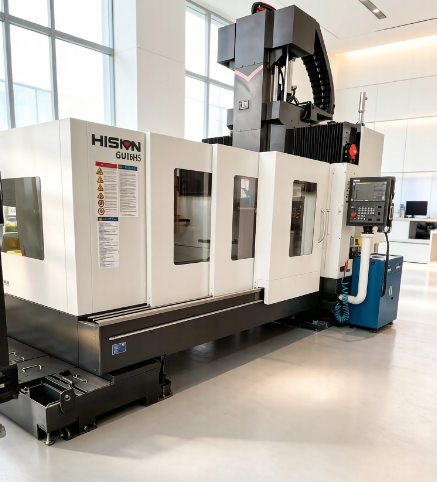
Aluminum alloy cnc gantry router
How It Differs from a CNC Mill: This is a key distinction. While they might look similar, routers are typically lighter, faster, and ideal for softer materials (like wood and plastics), spinning at high RPM (10,000–30,000) with lower torque. Mills are heavier, more rigid, and designed
×
Categories: PRODUCTS, Sheet Metal Fabrication
Tag: cnc gantry router
⚙️ What is a CNC Gantry Router & How Does It Work?
A CNC (Computer Numerical Control) Gantry Router is a subtractive manufacturing tool where a cutting spindle moves over a stationary workpiece on a bridge-like structure, called a gantry–-2. The machine removes material to create a desired shape based on programmed G-code instructions-1-12.
-
How It Differs from a CNC Mill: This is a key distinction. While they might look similar, routers are typically lighter, faster, and ideal for softer materials (like wood and plastics), spinning at high RPM (10,000–30,000) with lower torque. Mills are heavier, more rigid, and designed for hard metals, operating at lower RPMs with higher torque–-12. A gantry router is essentially a high-speed mill optimized for large, flat materials-3.
🏗️ Types of Gantry Configurations
The term “gantry” covers two primary design philosophies:
| Design | Structure & Motion | Key Characteristics |
|---|---|---|
| Moving Gantry | Gantry moves over a fixed table. The workpiece stays stationary-2-10. | Most common; compact footprint; great for large sheets; speed & rigidity can vary with build quality-2. |
| Fixed Bridge (Moving Table) | Gantry is stationary, the machine’s table moves under it along the X/Y axes. | Excellent rigidity & precision; better for heavy/composite materials; requires more floor space & is costlier-2. |
🔧 Core Components Driving Performance
A machine’s performance is defined by the quality of its core parts, not just its features-30.
| Component | Entry-Level / Hobbyist | Professional / Production |
|---|---|---|
| Structure | Thin-walled aluminum extrusions or light steel; prone to flex under load-25-30. | Heavy welded steel, machined plates; superior vibration damping for rigid, accurate cuts-30. |
| Linear Motion | V-slot wheels or unsupported round rails; can wear and develop “slop” over time-30. | Linear profile rails (e.g., Hiwin style) with recirculating ball bearings; handles side loads for long-term durability-30. |
| Drive System | Lead screws or belts; can have issues with backlash and reduced accuracy-25-30. | Precision ballscrews or helical racks; eliminates backlash for high repeatability–-30. |
| Spindle | A high-speed trim router (low power, loud, no speed feedback under load)-25-30. | Dedicated water/air-cooled spindle with a VFD; consistent torque & RPM, quieter, far longer life-30. |
| Control & Motors | Stepper motors (open-loop) with basic controller boards (e.g., Mach3, GRBL)-25-30. | Servo motors (closed-loop) with industrial controllers (e.g., Siemens); self-corrects for perfect positional accuracy–-30. |
| Precision | Achieves tolerances of approximately ±0.1–0.3mm-25. | Capable of ±0.01–0.05mm repeatability for high-volume, mission-critical parts-25. |
🎯 Primary Applications
The ideal material for a CNC router is large and flat. It excels in these industries:
-
Woodworking & Signage: The largest market–. For intricate furniture, doors, decorative moldings, and custom 3D signage in MDF, plywood, and solid wood–.
-
Plastics & Composites: Ideal for large acrylic/PVC sheets and composite panels used in aerospace, marine, and automotive for trimming, drilling, and routing–-19.
-
Light Metalwork: Capable of engraving, milling, and cutting soft metals like aluminum and brass. For hardened steel, a CNC mill is the right tool-1-12.
🏭 Automation and Scale: Beyond the Basics
For high-volume production, manufacturers integrate features beyond the standard 3-axis design:
-
Multi-Head: One gantry holds multiple spindles, cutting two or more identical parts simultaneously. This effectively doubles throughput for mass-producing specific components-32.
-
5-Axis Capability: The spindle can tilt and rotate, allowing for complex, 3D contours on a single setup, essential for aerospace and advanced automotive parts-10-19.
-
Automatic Tool Changers (ATC): Allows a single spindle to swap between dozens of tools automatically, ideal for complex parts that require multiple operations (e.g., drilling, then cutting)-10-19.
-
Workholding Systems: Professional machines often feature vacuum tables or T-slot beds to securely hold materials in place during high-speed cutting-12-25.
📊 How to Choose the Right Machine
Selecting a CNC router is a strategic investment balancing cost, capability, and production goals-25.
| Category | Price Range | Key Features | Best For |
|---|---|---|---|
| Entry-Level / Hobby | ~$1,000 – $15,000 | Small work area (~4×4 ft), belt/leadscrew drive, trim router spindle, stepper motors-25. | Learning, prototyping, light commercial use (MDF signage, foam mockups), 1-4 hours/day-25. |
| Production / Industrial | $40,000+ | Large work area (4×8 ft & up), heavy steel frame, servo motors, high-kW spindle, ATC/vacuum table-25. | High-volume, multi-shift manufacturing of wood, composites, and aluminum with tight tolerances-25. |
I hope this overview provides a clear picture of the CNC gantry router landscape. If you have a specific project or production scenario in mind, feel free to ask for more tailored insights